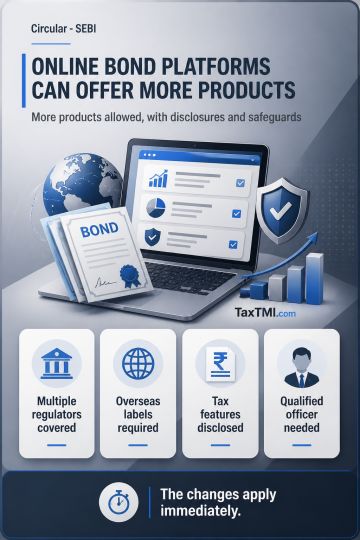
Online bond platforms may offer overseas-regulated products and tax-specific bonds subject to disclosures, compliance safeguards and revised complianc...
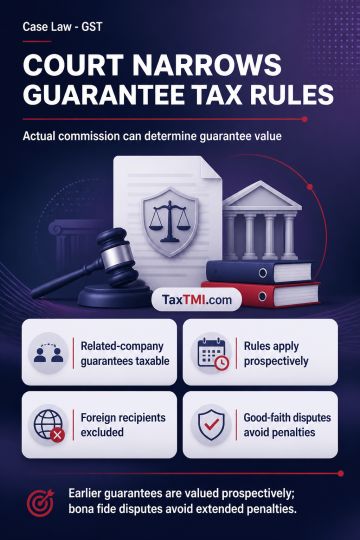
Corporate guarantee valuation permits actual ascertainable commission while barring retroactive application and extended-period penalties for bona fid...
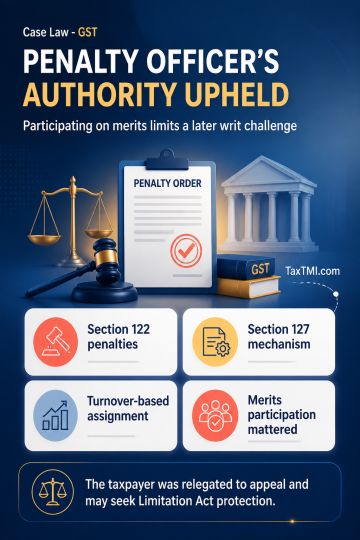
Proper-officer jurisdiction under UPGST penalty provisions upheld; participation on merits prevents bypassing the statutory appellate remedy through w...
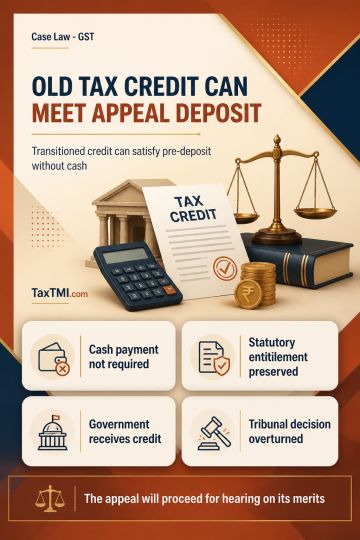
Transitioned CENVAT credit may validly satisfy mandatory pre-deposit requirements for legacy service tax appeals through Electronic Credit Ledger debi...
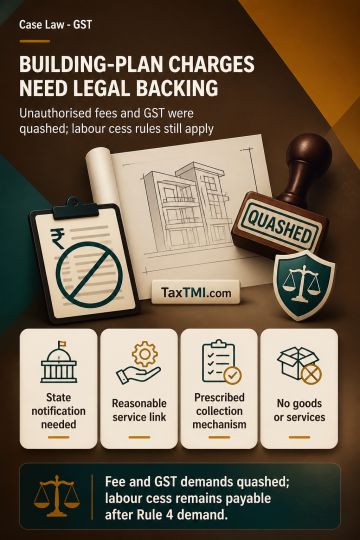
Building-plan sanction charges require statutory authority; unauthorised fees and GST were quashed, while labour cess must follow prescribed collectio...
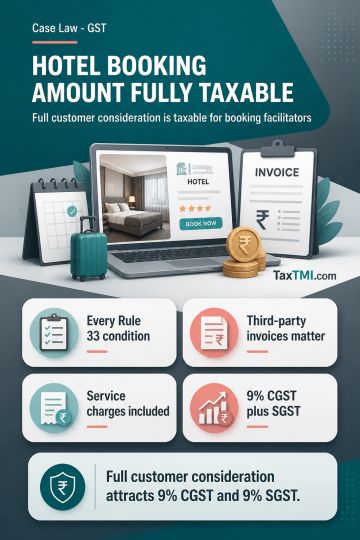
Pure-agent exclusion fails where hotel booking facilitators receive third-party services themselves, making entire customer consideration taxable as r...
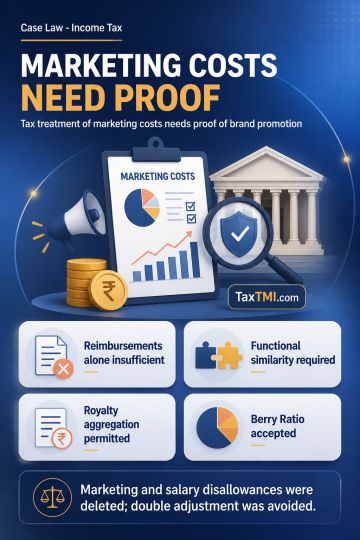
Transfer pricing requires evidence for AMP transactions, functionally reliable comparables, and appropriate aggregation or Berry Ratio benchmarking me...
The ITAT upheld rejection of the assessee's books of account under section 145(3) because verifiable labour records, third-party confirmations, project-wise details and reconciliations were not produced, and major expenses rested on self-made vouchers with no credible support. Once the accounts were rejected, profit had to be estimated on a fair and reasonable basis, but the Tribunal found the Assessing Officer's 8% rate excessive because it relied on non-comparable listed companies and a section 44AD benchmark that could not be mechanically applied beyond the prescribed turnover limit. Considering the nature of the sub-contract business, remote working conditions and defects in the records, profit was estimated at 5% of turnover.
The ITAT upheld rejection of the assessee's books of account under section 145(3) because verifiable labour records, third-party confirmations, project-wise details and reconciliations were not produced, and major expenses rested on self-made vouchers with no credible support. Once the accounts were rejected, profit had to be estimated on a fair and reasonable basis, but the Tribunal found the Assessing Officer's 8% rate excessive because it relied on non-comparable listed companies and a section 44AD benchmark that could not be mechanically applied beyond the prescribed turnover limit. Considering the nature of the sub-contract business, remote working conditions and defects in the records, profit was estimated at 5% of turnover.
Note: It is a system-generated summary and is for quick reference only.
 TaxTMI
  TaxTMI
 of 4817




 Join Channel


