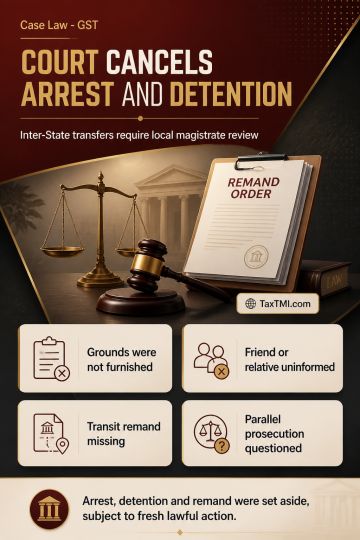
Arrest safeguards and transit remand requirements invalidated detention following inter-State transfer without communicated grounds or magistrate auth...
Arrest safeguards require disclosed grounds, relative intimation and transit remand, while duplicate prosecution under the CGST framework is unsustain...
Document Identification Number defects can invalidate GST assessments, with delayed challenges entertained conditionally where patent irregularities e...
Windmill commissioning evidence supported higher depreciation where grid connection and electricity generation proved operational use before the relev...
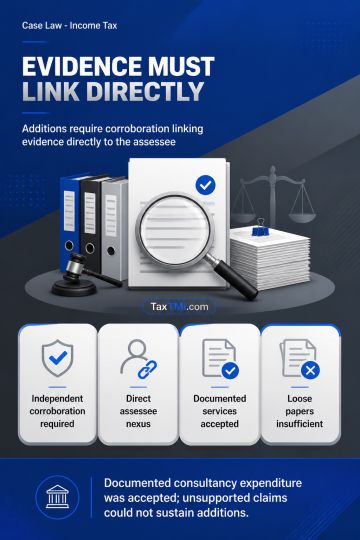
Pharmaceutical promotion and transfer-pricing comparability principles limited disallowances, while uncorroborated search allegations and unsupported ...
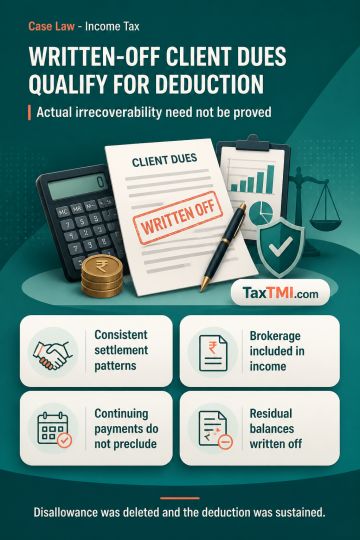
Business expenditure substantiation supports scrap credits, statutory payments and expense claims, while depreciation requires proof of actual busines...
ITAT held that back-to-back guarantee processing fees were correctly benchmarked under TNMM, because the assessee acted only as an administrative intermediary and did not bear the invocation risk; bank guarantee rates from third parties were not comparable, so the transfer-pricing adjustment was deleted. For derivative-related marketing support services, the Tribunal rejected PSM based on day-end NPV because the transactions were back-to-back, the assessee bore no trading risk, and aggregation of closely linked transactions left no surviving adjustment. It also held that telecommunication and expatriate personnel costs incurred exclusively for the Indian branch were direct branch expenses, not common administrative , so section 44C disallowance failed. Interest paid by the branch to head office or overseas branches remained a payment to self and was not taxable for the year in issue.
ITAT held that back-to-back guarantee processing fees were correctly benchmarked under TNMM, because the assessee acted only as an administrative intermediary and did not bear the invocation risk; bank guarantee rates from third parties were not comparable, so the transfer-pricing adjustment was deleted. For derivative-related marketing support services, the Tribunal rejected PSM based on day-end NPV because the transactions were back-to-back, the assessee bore no trading risk, and aggregation of closely linked transactions left no surviving adjustment. It also held that telecommunication and expatriate personnel costs incurred exclusively for the Indian branch were direct branch expenses, not common administrative , so section 44C disallowance failed. Interest paid by the branch to head office or overseas branches remained a payment to self and was not taxable for the year in issue.
Note: It is a system-generated summary and is for quick reference only.
 TaxTMI
  TaxTMI
 of 4817













 Join Channel