Working-capital adjustment determines whether software-services transfer-pricing margins fall within the statutory tolerance range, eliminating any ad...
Permanent establishment deductions upheld for expatriate salaries, direct costs and trading losses, while head-office costs require fresh classificati...
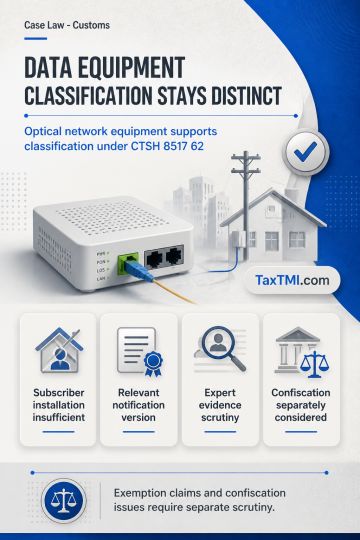
Data transmission equipment classification under CTSH 8517 62 remains distinct from residual classification, with exemption evidence requiring scrutin...
Section 32A was applied to protect the corporate debtor's property from attachment where an approved resolution plan had been implemented with a qualifying change in management. The Tribunal, following Manish Kumar, held that statutory immunity extends to property covered by the approved plan for offences committed before commencement of CIRP, so long as control passes to persons unconnected with the erstwhile management and not shown to have abetted or conspired in the offence. It rejected the argument that PMLA attachment could continue merely because the property was alleged to be proceeds of crime, and also noted that the underlying claim had already been finally rejected in insolvency proceedings. The attachment orders were set aside.
Section 32A was applied to protect the corporate debtor's property from attachment where an approved resolution plan had been implemented with a qualifying change in management. The Tribunal, following Manish Kumar, held that statutory immunity extends to property covered by the approved plan for offences committed before commencement of CIRP, so long as control passes to persons unconnected with the erstwhile management and not shown to have abetted or conspired in the offence. It rejected the argument that PMLA attachment could continue merely because the property was alleged to be proceeds of crime, and also noted that the underlying claim had already been finally rejected in insolvency proceedings. The attachment orders were set aside.
Note: It is a system-generated summary and is for quick reference only.
 TaxTMI
  TaxTMI
 of 4816




















 Join Channel