Dispute Resolution Panel objections must reach both prescribed forums; otherwise assessment may proceed and statutory appeal remains the proper remedy...
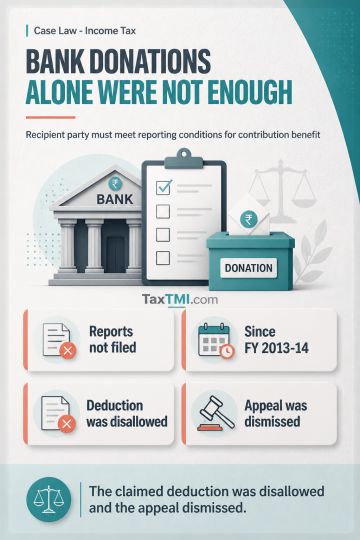
Political contribution deductions require recipient party compliance with contribution-reporting conditions; banking-channel donations alone do not qu...
Aggregation under TNMM prevents selective testing of intra-group services without comparable uncontrolled transactions, while appellate additional cla...
Protective assessment cannot duplicate identical receipts under competing characterisations; remote services did not establish a taxable permanent est...
Current account treatment of overseas tournament services removed most FEMA findings, but excess EEFC remittance and delayed repatriation remained bre...
Section 32A was applied to protect the corporate debtor's property from attachment where an approved resolution plan had been implemented with a qualifying change in management. The Tribunal, following Manish Kumar, held that statutory immunity extends to property covered by the approved plan for offences committed before commencement of CIRP, so long as control passes to persons unconnected with the erstwhile management and not shown to have abetted or conspired in the offence. It rejected the argument that PMLA attachment could continue merely because the property was alleged to be proceeds of crime, and also noted that the underlying claim had already been finally rejected in insolvency proceedings. The attachment orders were set aside.
Section 32A was applied to protect the corporate debtor's property from attachment where an approved resolution plan had been implemented with a qualifying change in management. The Tribunal, following Manish Kumar, held that statutory immunity extends to property covered by the approved plan for offences committed before commencement of CIRP, so long as control passes to persons unconnected with the erstwhile management and not shown to have abetted or conspired in the offence. It rejected the argument that PMLA attachment could continue merely because the property was alleged to be proceeds of crime, and also noted that the underlying claim had already been finally rejected in insolvency proceedings. The attachment orders were set aside.
Note: It is a system-generated summary and is for quick reference only.
 TaxTMI
  TaxTMI
 of 4819


















 Join Channel