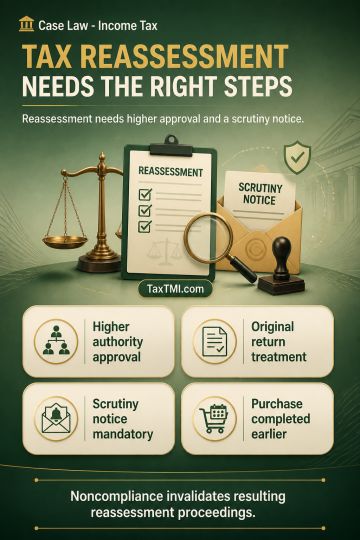
Opportunity to furnish unsecured-loan confirmations is required before reassessment initiation; proceedings require fresh consideration after taxpayer...
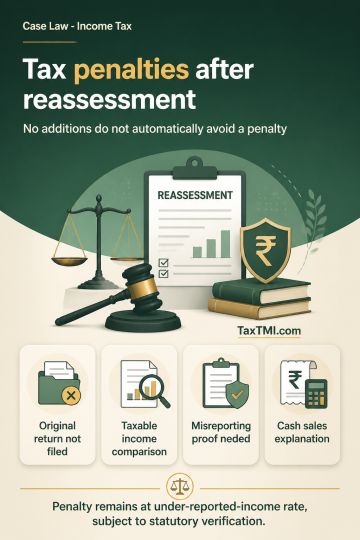
Under-reporting on a first reassessment return attracts penalty, while enhanced misreporting penalty requires proof of a statutory misreporting catego...
Classification of a processing arrangement depends on the agreement and the real nature of the work. Applying the control, integration and multi-factor tests, the Tribunal held that supervision, disciplinary control, wage liability and statutory compliance remained with the contractor, while the client only required completion of identified job-work outputs; the arrangement was therefore contract for service, not manpower supply, and was classifiable under BAS rather than MSS. The Tribunal further held that processing unmanufactured tobacco did not change its essential character as agricultural produce, so the activity remained in relation to agriculture or agricultural produce and qualified for exemption. The refund claim for the disputed periods was allowed.
Classification of a processing arrangement depends on the agreement and the real nature of the work. Applying the control, integration and multi-factor tests, the Tribunal held that supervision, disciplinary control, wage liability and statutory compliance remained with the contractor, while the client only required completion of identified job-work outputs; the arrangement was therefore contract for service, not manpower supply, and was classifiable under BAS rather than MSS. The Tribunal further held that processing unmanufactured tobacco did not change its essential character as agricultural produce, so the activity remained in relation to agriculture or agricultural produce and qualified for exemption. The refund claim for the disputed periods was allowed.
Note: It is a system-generated summary and is for quick reference only.
 TaxTMI
  TaxTMI
 of 4915