Charitable registration renewal cannot become an assessment of receipts, profitability or annual exemption compliance, requiring renewal and donation ...
AMP expenditure for own business is not an international transaction without an associated-enterprise arrangement, eliminating transfer pricing adjust...
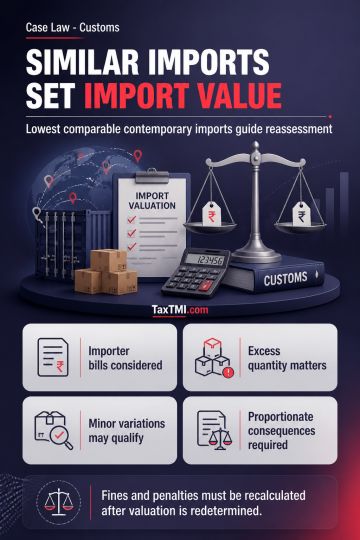
Customs valuation must use comparable contemporary imports, while confiscation fines and penalties require proportionate recalculation on reassessed v...
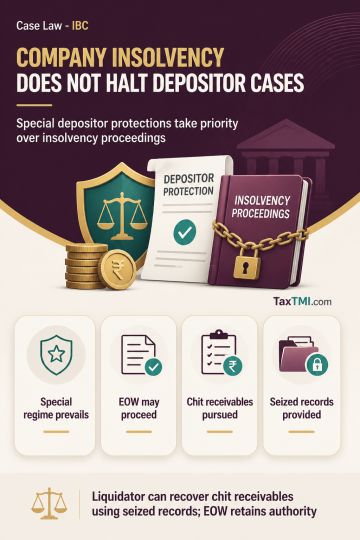
Depositor-protection proceedings prevail over corporate insolvency, while liquidators may recover chit receivables using copies of seized company reco...
Intermediary service classification fails where overseas admission facilitation is supplied independently, preserving export treatment and small-provi...
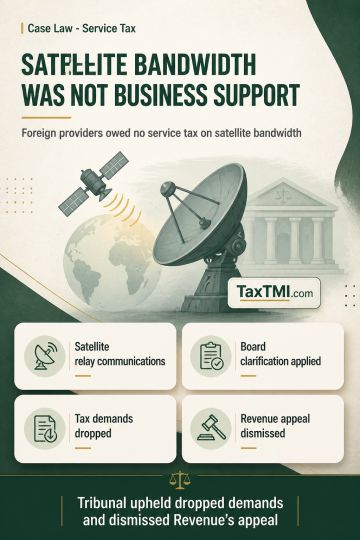
Satellite transponder bandwidth is telecommunication, not Business Support Service; foreign non-telegraph providers triggered no service tax liability...
Page of 4824
Press 'Enter' after typing page number.
441 to 460 of 96463 Results
❮
❯
❯❯
0 / 200
Expand Note
Add to Folder
No Folders have been created
+
Are you sure you want to delete "My most important" ?
Admission of additional evidence in appeal does not dispense with Rule 46A(3) compliance merely because the appellate authority invokes section 250(4). Where documents are produced for the first time in appeal and relied upon, the Assessing Officer must be confronted with them and given an opportunity to verify and comment. The Tribunal distinguished appellate enquiry powers from the separate procedure for admitting additional evidence, and held that they cannot be conflated to bypass the mandatory opportunity to the Assessing Officer. The deletion of the section 68 addition was therefore set aside on this limited ground, and the matter was remanded for fresh consideration after a remand report.
Admission of additional evidence in appeal does not dispense with Rule 46A(3) compliance merely because the appellate authority invokes section 250(4). Where documents are produced for the first time in appeal and relied upon, the Assessing Officer must be confronted with them and given an opportunity to verify and comment. The Tribunal distinguished appellate enquiry powers from the separate procedure for admitting additional evidence, and held that they cannot be conflated to bypass the mandatory opportunity to the Assessing Officer. The deletion of the section 68 addition was therefore set aside on this limited ground, and the matter was remanded for fresh consideration after a remand report.
Note: It is a system-generated summary and is for quick reference only.
 TaxTMI
  TaxTMI
 of 4824








 Join Channel


