Patent-settlement expenditure treated as commercially expedient revenue outlay, with foreign-law restrictions inapplicable before the prospective amen...
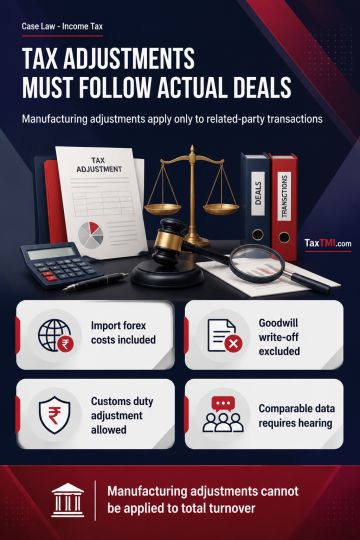
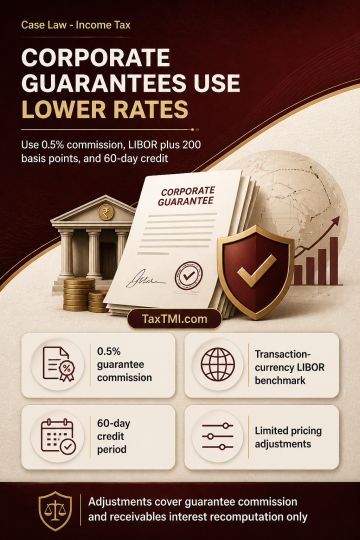
International transaction benchmarking restricts transfer pricing adjustments to associated-enterprise dealings, while functional comparability govern...
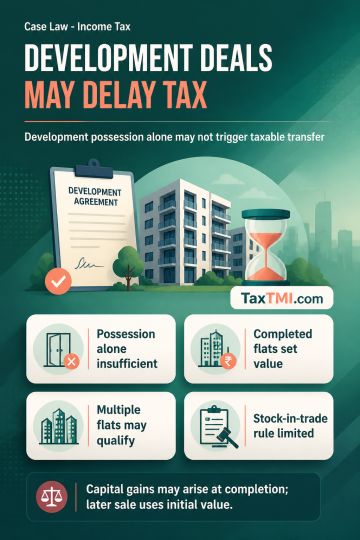
Joint development agreements defer taxable transfer where possession lacks part performance, while completed flats determine consideration and exempti...
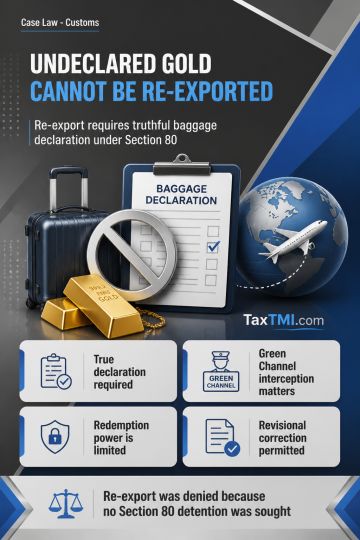
Passenger baggage re-export requires true declaration and cannot be granted indirectly through discretionary redemption of undeclared prohibited goods...
The Tribunal held that the extended period of limitation was not available for a customs demand raised about four years after clearance, because the record showed a consistent earlier and later classification of the same goods without objection and supported a bona fide belief by the importer. It further held that non-imposition of penalty under Section 114AA did not, by itself, mean there was no suppression. Finding no misdeclaration or suppression on the facts, the Tribunal set aside the impugned order as time-barred and allowed the appeal solely on limitation, leaving the classification dispute undecided.
The Tribunal held that the extended period of limitation was not available for a customs demand raised about four years after clearance, because the record showed a consistent earlier and later classification of the same goods without objection and supported a bona fide belief by the importer. It further held that non-imposition of penalty under Section 114AA did not, by itself, mean there was no suppression. Finding no misdeclaration or suppression on the facts, the Tribunal set aside the impugned order as time-barred and allowed the appeal solely on limitation, leaving the classification dispute undecided.
Note: It is a system-generated summary and is for quick reference only.
 TaxTMI
  TaxTMI
 of 4814




 Join Channel