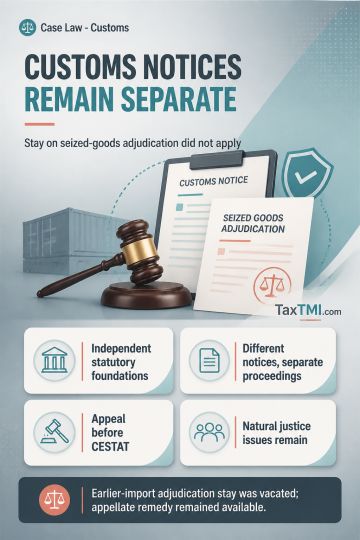
Independent show-cause notices remain separate proceedings, while customs adjudication challenges should ordinarily follow the statutory appellate rem...
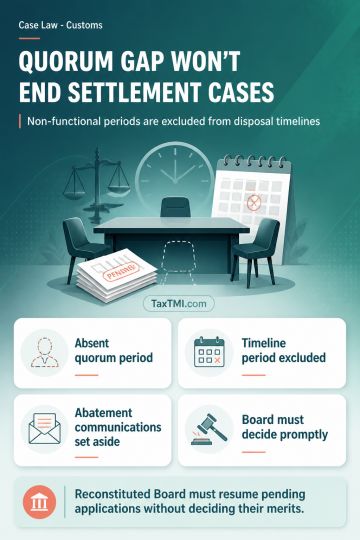
Institutional incapacity in customs settlement proceedings excludes non-functional quorum periods from statutory disposal timelines, preventing automa...
Interactive touchscreen panels with integrated computing functions fall under automatic data-processing machines rather than display monitors for cust...
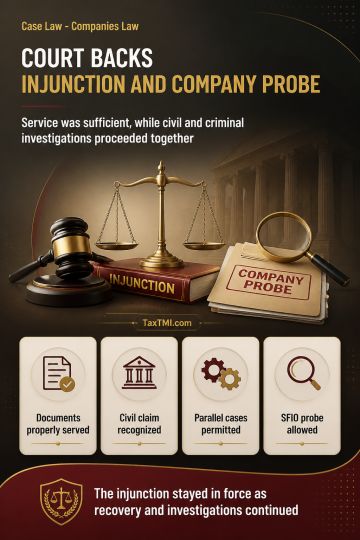
Ex parte injunction service requirements were substantially met, while civil recovery and SFIO investigation into provident fund defalcation continued...
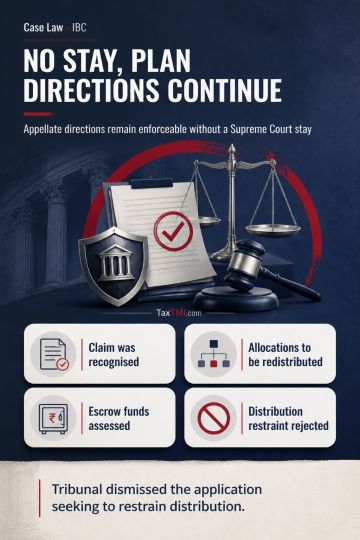
Enforcement of resolution-plan directions continues without a Supreme Court stay, preventing suspension of redistribution and escrowed-fund distributi...
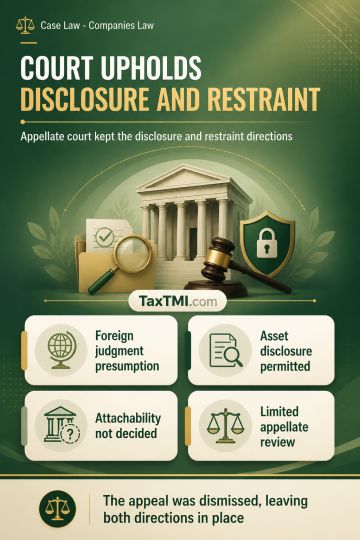
Third-party ownership claims over attached property require Special Court adjudication where purchasers lack registered sale deeds and bona fides rema...
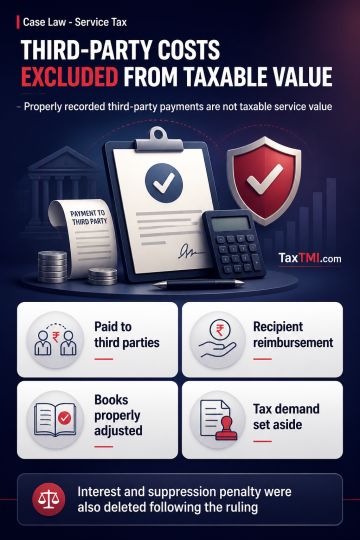
Pure-agent reimbursements in clearing and forwarding services are excluded from taxable value when qualifying third-party payments are properly record...
Customs relief for Strait of Hormuz maritime disruptions remains available, with existing conditions continuing unchanged through the extended validit...
Page of 4817
Press 'Enter' after typing page number.
721 to 740 of 96333 Results
❮
❯
❯❯
0 / 200
Expand Note
Add to Folder
No Folders have been created
+
Are you sure you want to delete "My most important" ?
A prior Section 95 application had already triggered the statutory interim moratorium, so a later personal insolvency application filed during that subsisting moratorium was non-est in law and could not create a fresh Section 96 bar. On that basis, the creditor's second application was maintainable and its admission was upheld. The personal guarantor also remained liable because the guarantee was a continuing one, expressly unaffected by any change in the constitution of the borrowers, and the liability was co-extensive with the principal borrowers until full repayment. The plea that the change in borrower entity discharged the guarantor was rejected.
A prior Section 95 application had already triggered the statutory interim moratorium, so a later personal insolvency application filed during that subsisting moratorium was non-est in law and could not create a fresh Section 96 bar. On that basis, the creditor's second application was maintainable and its admission was upheld. The personal guarantor also remained liable because the guarantee was a continuing one, expressly unaffected by any change in the constitution of the borrowers, and the liability was co-extensive with the principal borrowers until full repayment. The plea that the change in borrower entity discharged the guarantor was rejected.
Note: It is a system-generated summary and is for quick reference only.
 TaxTMI
  TaxTMI
 of 4817








 Join Channel