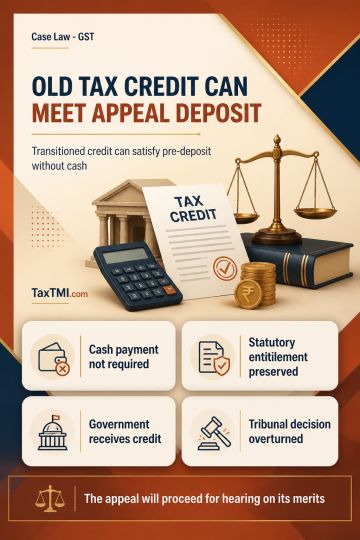
Transitioned CENVAT credit may validly satisfy mandatory pre-deposit requirements for legacy service tax appeals through Electronic Credit Ledger debi...
Building-plan sanction charges require statutory authority; unauthorised fees and GST were quashed, while labour cess must follow prescribed collectio...
Pure-agent exclusion fails where hotel booking facilitators receive third-party services themselves, making entire customer consideration taxable as r...
Transfer pricing requires evidence for AMP transactions, functionally reliable comparables, and appropriate aggregation or Berry Ratio benchmarking me...
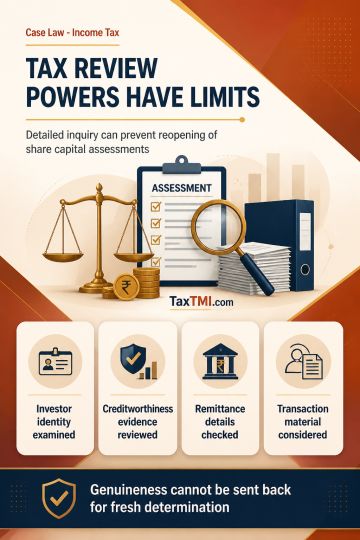
Revisionary jurisdiction cannot reopen share capital assessments where adequate inquiry supports a permissible view and no independent error is establ...
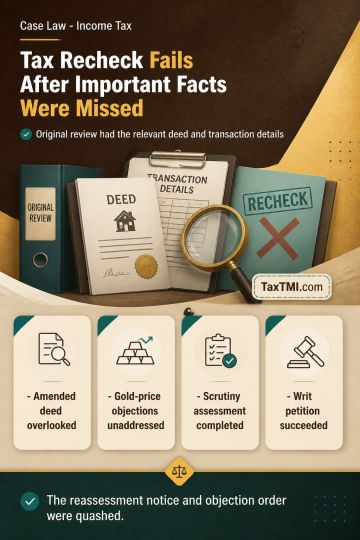
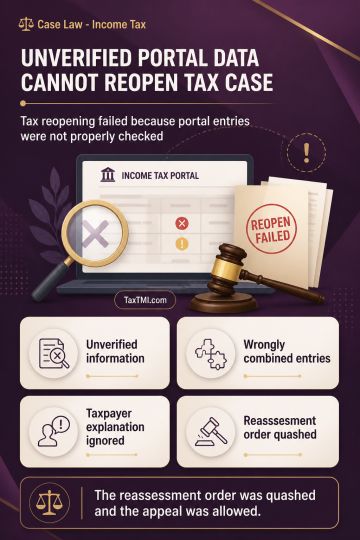
Reassessment jurisdiction fails where unverified portal information is aggregated without examining the taxpayer's explanation or relevance of entries...
Statutory sanction for delayed reassessment requires approval from the prescribed authority; approval by an inferior authority invalidates jurisdictio...
Submission of a repayment plan under the personal guarantor insolvency framework is mandatory, and one-time settlement proposals cannot replace it. Because the personal guarantors admittedly failed to submit any repayment plan despite opportunity, the Tribunal treated the plan as deemed rejected and upheld the creditor's move to initiate bankruptcy under the Code. Co-extensive liability under the guarantee deed was recognised, and objections about dues calculation, earlier settlement efforts, and prior SARFAESI or insolvency events did not defeat the bankruptcy process at this stage. The Tribunal affirmed the maintainability of the bankruptcy applications and sustained initiation of proceedings against the guarantors.
Submission of a repayment plan under the personal guarantor insolvency framework is mandatory, and one-time settlement proposals cannot replace it. Because the personal guarantors admittedly failed to submit any repayment plan despite opportunity, the Tribunal treated the plan as deemed rejected and upheld the creditor's move to initiate bankruptcy under the Code. Co-extensive liability under the guarantee deed was recognised, and objections about dues calculation, earlier settlement efforts, and prior SARFAESI or insolvency events did not defeat the bankruptcy process at this stage. The Tribunal affirmed the maintainability of the bankruptcy applications and sustained initiation of proceedings against the guarantors.
Note: It is a system-generated summary and is for quick reference only.
 TaxTMI
  TaxTMI
 of 4826













 Join Channel


