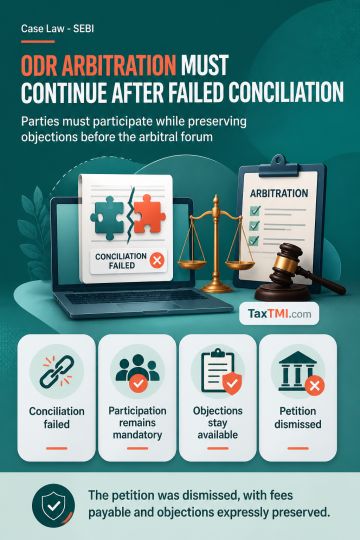
ODR arbitration participation remains mandatory after failed conciliation, while jurisdictional and maintainability objections stay available before t...
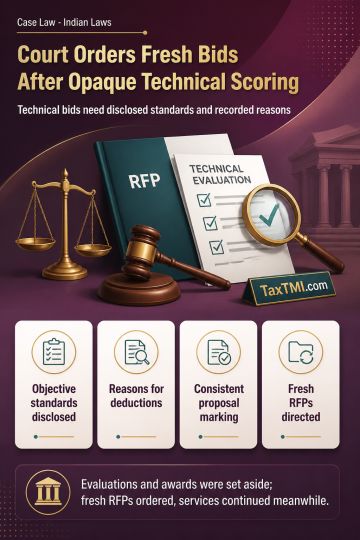
Transparency in technical bid evaluation requires disclosed standards and recorded reasons; opaque scoring invalidated tender awards and required fres...
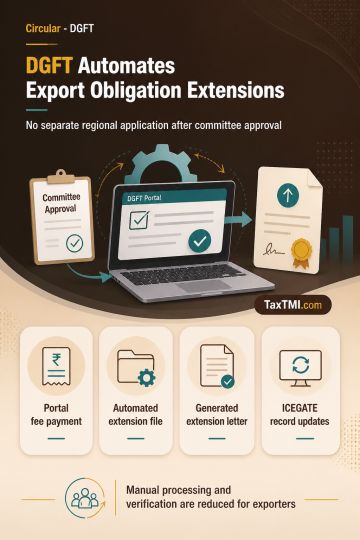
Automated export obligation extensions remove separate regional applications after committee approval for Advance Authorisation and EPCG authorisation...
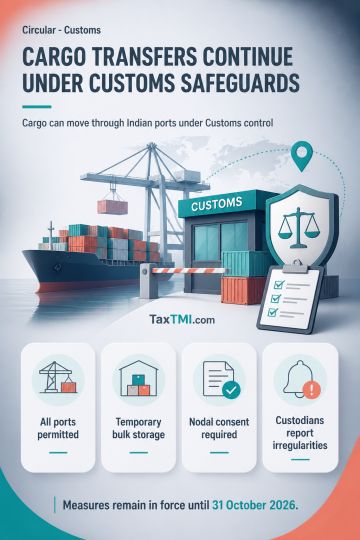
International cargo transhipment through Indian ports continues with Customs-controlled storage, re-export safeguards, and coordinated multi-station m...
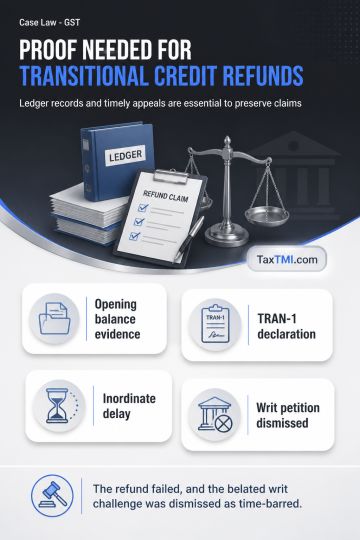
A writ challenge to rejection of a GST refund was declined because the Court found no jurisdictional defect or breach of natural justice warranting Article 226 interference. It held that there is a material distinction between lack of jurisdiction and an erroneous exercise of jurisdiction, and that disputes over the correctness of factual findings, including adequacy of supporting refund documents, should be pursued in the statutory appellate forum. The Court also rejected the argument that the GSTAT was inefficacious, noting that the Tribunal had begun functioning and could hear appeals. The petitioner was relegated to the statutory appeal, with all merits left open.
A writ challenge to rejection of a GST refund was declined because the Court found no jurisdictional defect or breach of natural justice warranting Article 226 interference. It held that there is a material distinction between lack of jurisdiction and an erroneous exercise of jurisdiction, and that disputes over the correctness of factual findings, including adequacy of supporting refund documents, should be pursued in the statutory appellate forum. The Court also rejected the argument that the GSTAT was inefficacious, noting that the Tribunal had begun functioning and could hear appeals. The petitioner was relegated to the statutory appeal, with all merits left open.
Note: It is a system-generated summary and is for quick reference only.
 TaxTMI
  TaxTMI
 of 4819










 Join Channel