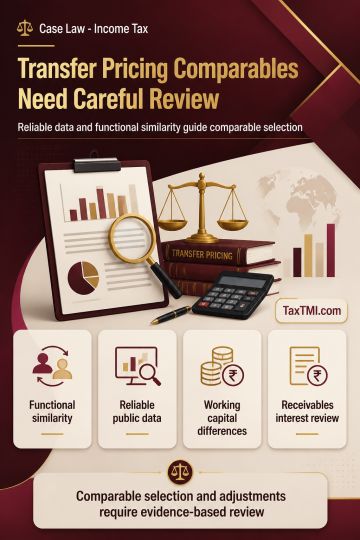
Transfer pricing comparability requires functional alignment, reliable financial data, and careful review of working capital and receivables adjustmen...
Transfer pricing rules require benchmarking corporate guarantees and associated-enterprise advances, while invalid domestic-transaction adjustments ca...
Prospective sugar export prohibition required registered letters of credit; private contracts and export quotas created no enforceable continuation ri...
Retroactive interim-moratorium exclusion permits protective asset disclosure and preservation measures against personal guarantors pending arbitration...
Mere deposit of cash in an electronic cash ledger does not amount to payment of GST unless the amount is appropriated to the Government exchequer under Section 49(1) read with Rule 87(6) and (7); where appropriation occurs later, the tax liability is discharged only then and interest remains payable for the period of delay. Input tax credit arising from reverse charge could not be availed before appropriation, but separate recovery of the wrongly availed credit was not justified after the taxpayer later made the debit entries and the amount stood appropriated. The Court also found that the question whether the omission reflected inadvertence or suppression with intent to evade tax required fresh factual consideration, and the composite order for two tax periods was set aside with remand for separate orders.
Mere deposit of cash in an electronic cash ledger does not amount to payment of GST unless the amount is appropriated to the Government exchequer under Section 49(1) read with Rule 87(6) and (7); where appropriation occurs later, the tax liability is discharged only then and interest remains payable for the period of delay. Input tax credit arising from reverse charge could not be availed before appropriation, but separate recovery of the wrongly availed credit was not justified after the taxpayer later made the debit entries and the amount stood appropriated. The Court also found that the question whether the omission reflected inadvertence or suppression with intent to evade tax required fresh factual consideration, and the composite order for two tax periods was set aside with remand for separate orders.
Note: It is a system-generated summary and is for quick reference only.
 TaxTMI
  TaxTMI
 of 4817















 Join Channel