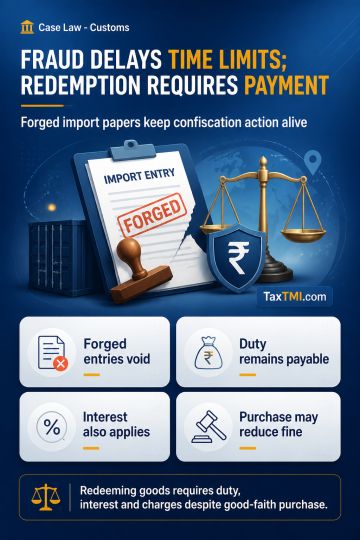
Fraudulent import documents suspend limitation protection, while redemption of confiscated goods requires duty and interest despite bona fide purchase...
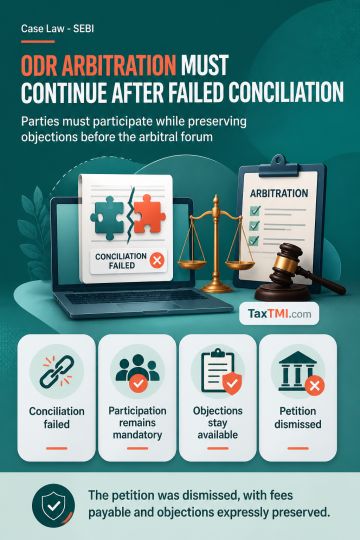
ODR arbitration participation remains mandatory after failed conciliation, while jurisdictional and maintainability objections stay available before t...
Transparency in technical bid evaluation requires disclosed standards and recorded reasons; opaque scoring invalidated tender awards and required fres...
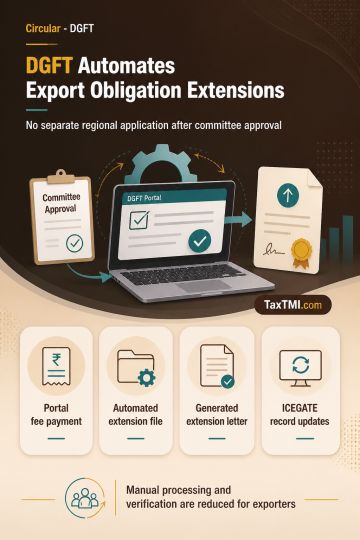
Automated export obligation extensions remove separate regional applications after committee approval for Advance Authorisation and EPCG authorisation...
International cargo transhipment through Indian ports continues with Customs-controlled storage, re-export safeguards, and coordinated multi-station m...
Mere deposit of cash in an electronic cash ledger does not amount to payment of GST unless the amount is appropriated to the Government exchequer under Section 49(1) read with Rule 87(6) and (7); where appropriation occurs later, the tax liability is discharged only then and interest remains payable for the period of delay. Input tax credit arising from reverse charge could not be availed before appropriation, but separate recovery of the wrongly availed credit was not justified after the taxpayer later made the debit entries and the amount stood appropriated. The Court also found that the question whether the omission reflected inadvertence or suppression with intent to evade tax required fresh factual consideration, and the composite order for two tax periods was set aside with remand for separate orders.
Mere deposit of cash in an electronic cash ledger does not amount to payment of GST unless the amount is appropriated to the Government exchequer under Section 49(1) read with Rule 87(6) and (7); where appropriation occurs later, the tax liability is discharged only then and interest remains payable for the period of delay. Input tax credit arising from reverse charge could not be availed before appropriation, but separate recovery of the wrongly availed credit was not justified after the taxpayer later made the debit entries and the amount stood appropriated. The Court also found that the question whether the omission reflected inadvertence or suppression with intent to evade tax required fresh factual consideration, and the composite order for two tax periods was set aside with remand for separate orders.
Note: It is a system-generated summary and is for quick reference only.
 TaxTMI
  TaxTMI
 of 4821
















 Join Channel