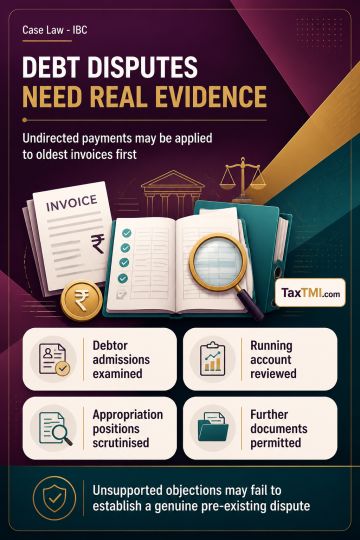
Pre-existing operational debt disputes require genuine evidence, while undirected running-account payments may be appropriated on a first-in-first-out...
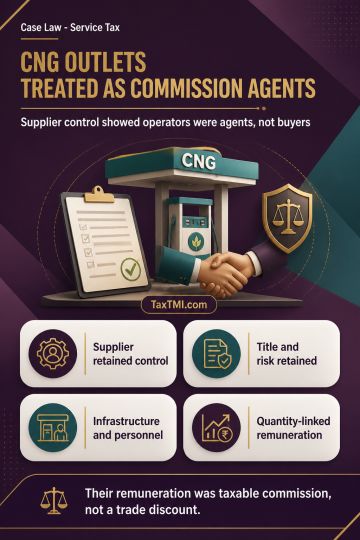
Agency in CNG distribution makes outlet operators commission agents, rendering taxable Business Auxiliary Service rather than purchasing goods for res...
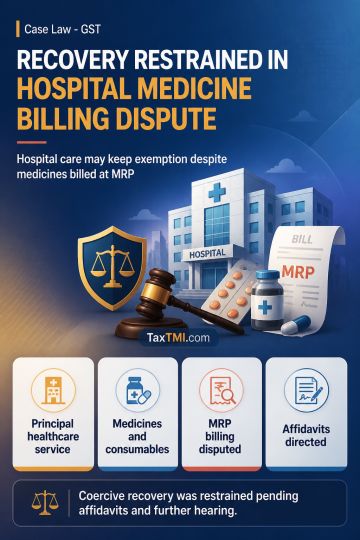
Composite inpatient healthcare supply may retain exemption despite MRP medicine billing, while separate taxable sale characterisation remains disputed...
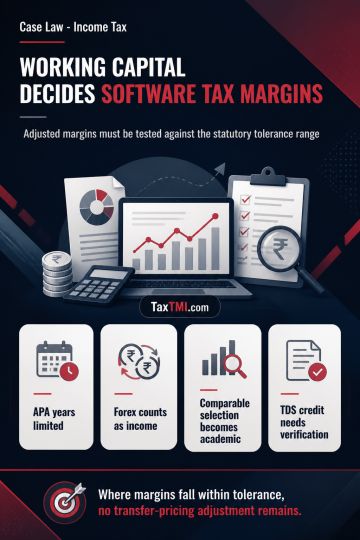
Working-capital adjustment determines whether software-services transfer-pricing margins fall within the statutory tolerance range, eliminating any ad...
Page of 4813
Press 'Enter' after typing page number.
1221 to 1240 of 96257 Results
❮
❯
❯❯
0 / 200
Expand Note
Add to Folder
No Folders have been created
+
Are you sure you want to delete "My most important" ?
Section 2(28C) defining "Joint Commissioner" to include the Additional Commissioner governed the approval requirement for penalty proceedings, and a harmonious reading of the Act showed no indication in section 274(2) that the inclusive definition was excluded. Provisions that separately mentioned both officers were treated as clarificatory rather than restrictive, and reading the term otherwise would make the statutory definition ineffective. Prior approval by the Additional Commissioner was therefore valid compliance with the approval requirement, and the challenge to the penalty proceedings on want of proper sanction failed. The writ petitions were dismissed, with liberty preserved to pursue statutory remedies on the merits.
Section 2(28C) defining "Joint Commissioner" to include the Additional Commissioner governed the approval requirement for penalty proceedings, and a harmonious reading of the Act showed no indication in section 274(2) that the inclusive definition was excluded. Provisions that separately mentioned both officers were treated as clarificatory rather than restrictive, and reading the term otherwise would make the statutory definition ineffective. Prior approval by the Additional Commissioner was therefore valid compliance with the approval requirement, and the challenge to the penalty proceedings on want of proper sanction failed. The writ petitions were dismissed, with liberty preserved to pursue statutory remedies on the merits.
Note: It is a system-generated summary and is for quick reference only.
 TaxTMI
  TaxTMI
 of 4813










 Join Channel