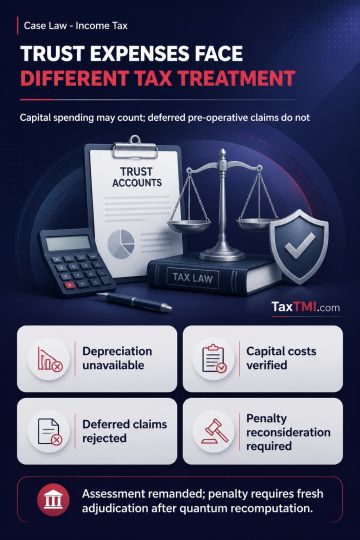
Charitable trust income application permits verified capital expenditure but rejects deferred pre-operative claims and requires reconsideration of con...
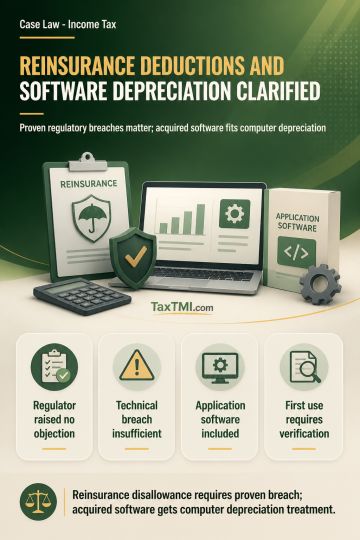
Reinsurance premium deductions require established regulatory breaches, while independently acquired software qualifies within the computer depreciati...
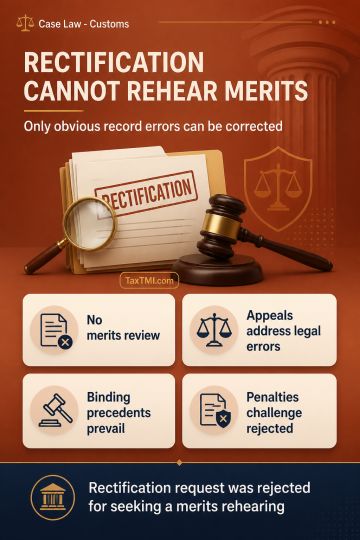
Rectification of mistake remains limited to self-evident record errors, preventing merits review through miscellaneous applications and preserving fin...
Tender creditworthiness conditions may extend to de facto Promoter Directors, with post-participation challenges generally barred absent arbitrariness...
Page of 4814
Press 'Enter' after typing page number.
1121 to 1140 of 96262 Results
❮
❯
❯❯
0 / 200
Expand Note
Add to Folder
No Folders have been created
+
Are you sure you want to delete "My most important" ?
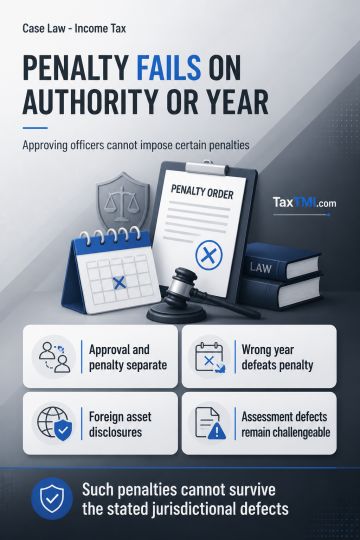
Section 2(28C) defining "Joint Commissioner" to include the Additional Commissioner governed the approval requirement for penalty proceedings, and a harmonious reading of the Act showed no indication in section 274(2) that the inclusive definition was excluded. Provisions that separately mentioned both officers were treated as clarificatory rather than restrictive, and reading the term otherwise would make the statutory definition ineffective. Prior approval by the Additional Commissioner was therefore valid compliance with the approval requirement, and the challenge to the penalty proceedings on want of proper sanction failed. The writ petitions were dismissed, with liberty preserved to pursue statutory remedies on the merits.
Section 2(28C) defining "Joint Commissioner" to include the Additional Commissioner governed the approval requirement for penalty proceedings, and a harmonious reading of the Act showed no indication in section 274(2) that the inclusive definition was excluded. Provisions that separately mentioned both officers were treated as clarificatory rather than restrictive, and reading the term otherwise would make the statutory definition ineffective. Prior approval by the Additional Commissioner was therefore valid compliance with the approval requirement, and the challenge to the penalty proceedings on want of proper sanction failed. The writ petitions were dismissed, with liberty preserved to pursue statutory remedies on the merits.
Note: It is a system-generated summary and is for quick reference only.
 TaxTMI
  TaxTMI
 of 4814












 Join Channel


