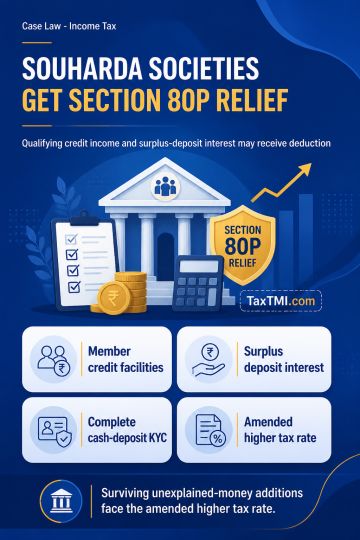
Section 80P deduction covers Souharda credit societies, including qualifying surplus-deposit interest, subject to member KYC verification for cash dep...
Transfer-pricing benchmarking and capital-receipt principles sustained taxpayer relief, while unsupported property-advance write-offs remained disallo...
Pre-existing operational debt disputes require genuine evidence, while undirected running-account payments may be appropriated on a first-in-first-out...
Agency in CNG distribution makes outlet operators commission agents, rendering taxable Business Auxiliary Service rather than purchasing goods for res...
Bluetooth wireless earphones, headphones, earbuds and neckbands were classified as headphones or earphones under CTI 8518 30 00 because their objective character and commercial identity fell within the specific eo nomine heading for audio reproduction devices. Bluetooth connectivity was treated as only the means of linking to a device, not as altering the essential nature of the goods into data transmission equipment, so the broader residual heading in 8517 was rejected. The concessional notification linked to CTI 8517 62 90 was therefore unavailable, and the duty demand was sustainable on merits. However, the extended period of limitation was not justified because the dispute was one of classification and intent to evade duty was not established; penalty under section 114A also could not survive. The matter was remitted only for the normal-period demand and consequential interest.
Bluetooth wireless earphones, headphones, earbuds and neckbands were classified as headphones or earphones under CTI 8518 30 00 because their objective character and commercial identity fell within the specific eo nomine heading for audio reproduction devices. Bluetooth connectivity was treated as only the means of linking to a device, not as altering the essential nature of the goods into data transmission equipment, so the broader residual heading in 8517 was rejected. The concessional notification linked to CTI 8517 62 90 was therefore unavailable, and the duty demand was sustainable on merits. However, the extended period of limitation was not justified because the dispute was one of classification and intent to evade duty was not established; penalty under section 114A also could not survive. The matter was remitted only for the normal-period demand and consequential interest.
Note: It is a system-generated summary and is for quick reference only.
 TaxTMI
  TaxTMI
 of 4817












 Join Channel


