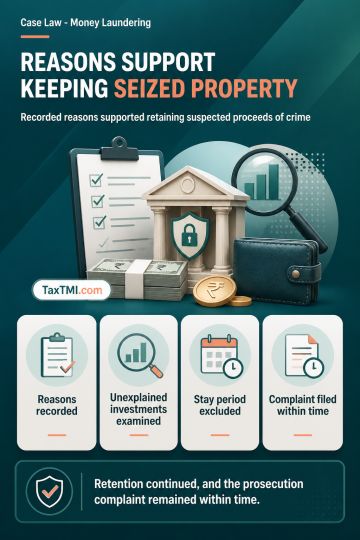
Retention of seized property survives where recorded reasons support proceeds of crime, while stayed investigation periods are excluded from limitatio...
Specified income of Baddi Barotiwala Nalagarh Development Authority receives conditional tax exemption, retrospectively covering its designated assess...
Specified development authority income receives retrospective tax exemption, subject to non-commercial activity, unchanged income sources, and return-...
Unified Brand India framework introduces voluntary Trust Mark certification and funding support for export branding, packaging and global promotional ...
Origin Declaration authentication governs preferential tariff claims under India-UK CETA, requiring a validated reference number before import clearan...
Separate assessment orders for different years remain valid when distinct notices and hearing opportunities prevent prejudice from combined proceeding...
Preferential duty exemption under SAFTA was upheld where the certificates of origin, later verified by Bangladesh authorities, were confirmed as correct and could not be disregarded on a unilateral assumption about the origin of the goods. The Tribunal also rejected selective retesting and extrapolation of a few later laboratory results to all consignments, finding the method legally untenable and inconsistent with the original reports. It further held that the extended period of limitation was unavailable because the import documents had been disclosed at clearance and no suppression, wilful misstatement or collusion was proved. The objection that recovery proceedings were invalid for want of a departmental appeal against self-assessed bills of entry was also rejected.
Preferential duty exemption under SAFTA was upheld where the certificates of origin, later verified by Bangladesh authorities, were confirmed as correct and could not be disregarded on a unilateral assumption about the origin of the goods. The Tribunal also rejected selective retesting and extrapolation of a few later laboratory results to all consignments, finding the method legally untenable and inconsistent with the original reports. It further held that the extended period of limitation was unavailable because the import documents had been disclosed at clearance and no suppression, wilful misstatement or collusion was proved. The objection that recovery proceedings were invalid for want of a departmental appeal against self-assessed bills of entry was also rejected.
Note: It is a system-generated summary and is for quick reference only.
 TaxTMI
  TaxTMI
 of 4814


















 Join Channel




