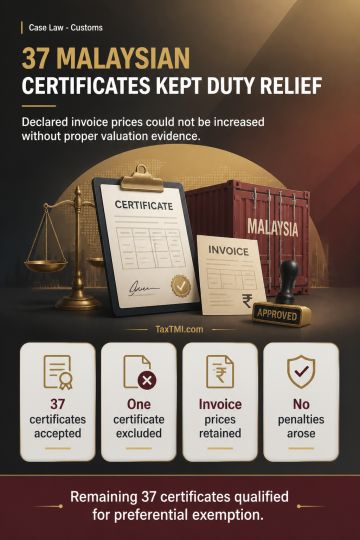
Country of Origin Certificates and declared transaction value supported preferential customs exemption where authenticity and invoice prices remained ...
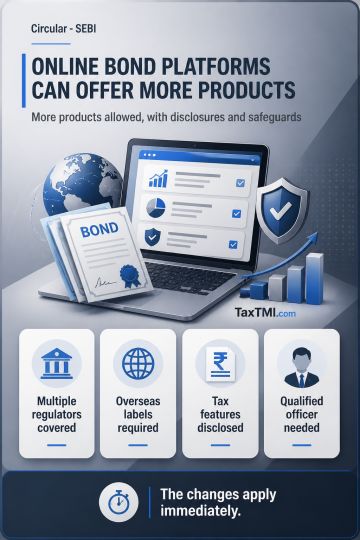
Online bond platforms may offer overseas-regulated products and tax-specific bonds subject to disclosures, compliance safeguards and revised complianc...
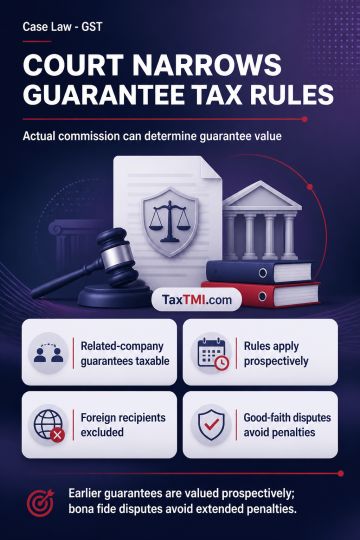
Corporate guarantee valuation permits actual ascertainable commission while barring retroactive application and extended-period penalties for bona fid...
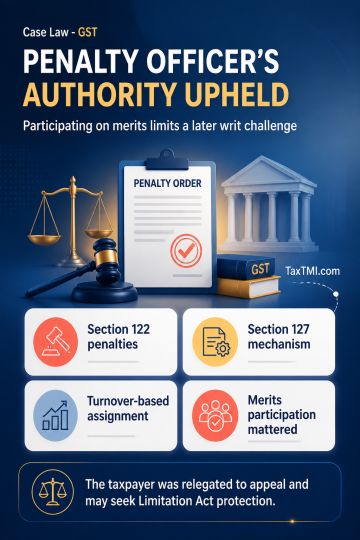
Proper-officer jurisdiction under UPGST penalty provisions upheld; participation on merits prevents bypassing the statutory appellate remedy through w...
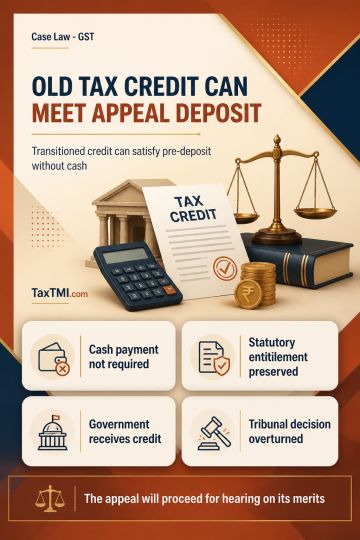
Transitioned CENVAT credit may validly satisfy mandatory pre-deposit requirements for legacy service tax appeals through Electronic Credit Ledger debi...
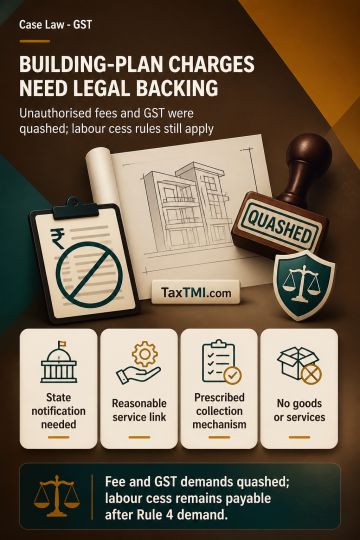
Building-plan sanction charges require statutory authority; unauthorised fees and GST were quashed, while labour cess must follow prescribed collectio...
Preferential duty exemption under SAFTA was upheld where the certificates of origin, later verified by Bangladesh authorities, were confirmed as correct and could not be disregarded on a unilateral assumption about the origin of the goods. The Tribunal also rejected selective retesting and extrapolation of a few later laboratory results to all consignments, finding the method legally untenable and inconsistent with the original reports. It further held that the extended period of limitation was unavailable because the import documents had been disclosed at clearance and no suppression, wilful misstatement or collusion was proved. The objection that recovery proceedings were invalid for want of a departmental appeal against self-assessed bills of entry was also rejected.
Preferential duty exemption under SAFTA was upheld where the certificates of origin, later verified by Bangladesh authorities, were confirmed as correct and could not be disregarded on a unilateral assumption about the origin of the goods. The Tribunal also rejected selective retesting and extrapolation of a few later laboratory results to all consignments, finding the method legally untenable and inconsistent with the original reports. It further held that the extended period of limitation was unavailable because the import documents had been disclosed at clearance and no suppression, wilful misstatement or collusion was proved. The objection that recovery proceedings were invalid for want of a departmental appeal against self-assessed bills of entry was also rejected.
Note: It is a system-generated summary and is for quick reference only.
 TaxTMI
  TaxTMI
 of 4819




 Join Channel