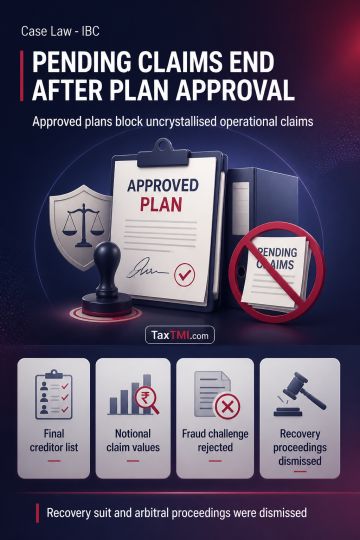
Clean slate principle extinguishes uncrystallised operational claims and bars continuation of pending recovery and arbitral proceedings after plan app...
Works contract classification governs composite layout-development contracts where VAT-paid goods are transferred alongside construction and infrastru...
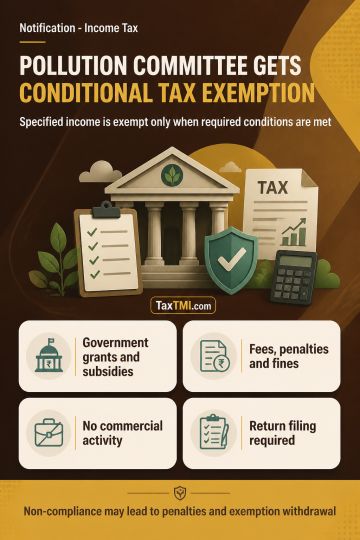
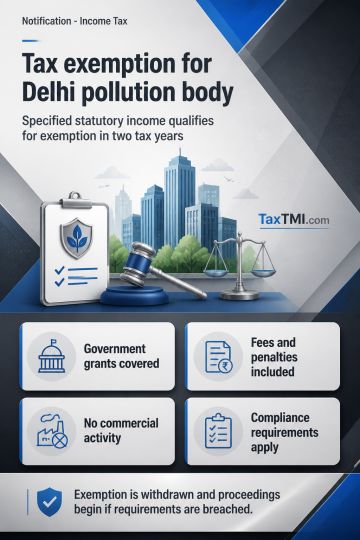
Specified income tax exemption for pollution control body remains conditional on non-commercial activity, unchanged income character, and return filin...
An application under Section 7 of the Insolvency and Bankruptcy Code is governed by Article 137 of the Limitation Act, and time runs from the date of default. The Court held that limitation began when the accounts were classified as NPA on 06.12.2016, not from the later end of SARFAESI proceedings. After excluding the moratorium period under Section 60(6) and the Covid-related exclusion orders, the petition was still filed beyond the remaining limitation period and was time-barred. The Court also held that admission of a claim by the IRP/RP is only an administrative act and does not amount to acknowledgment under Section 18 of the Limitation Act, which requires a conscious admission by the debtor or authorised person before limitation expires.
An application under Section 7 of the Insolvency and Bankruptcy Code is governed by Article 137 of the Limitation Act, and time runs from the date of default. The Court held that limitation began when the accounts were classified as NPA on 06.12.2016, not from the later end of SARFAESI proceedings. After excluding the moratorium period under Section 60(6) and the Covid-related exclusion orders, the petition was still filed beyond the remaining limitation period and was time-barred. The Court also held that admission of a claim by the IRP/RP is only an administrative act and does not amount to acknowledgment under Section 18 of the Limitation Act, which requires a conscious admission by the debtor or authorised person before limitation expires.
Note: It is a system-generated summary and is for quick reference only.
 TaxTMI
  TaxTMI
 of 4814







 Join Channel