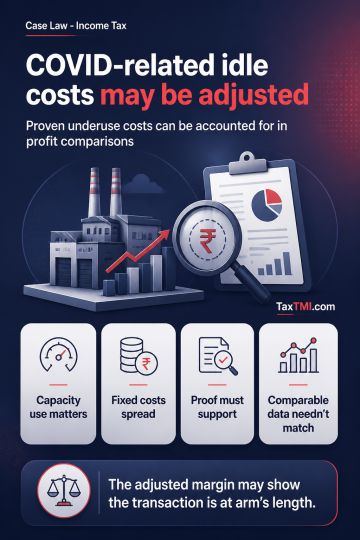
Capacity-utilisation adjustments under TNMM can neutralise substantiated COVID-related idle costs where underutilisation materially affects profitabil...
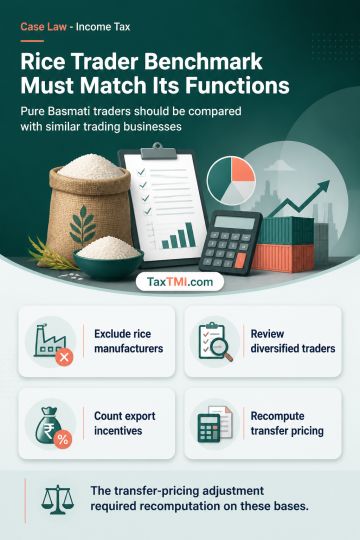
TNMM functional comparability requires excluding rice manufacturers from a pure Basmati rice trader's benchmark and recognising operating export recei...
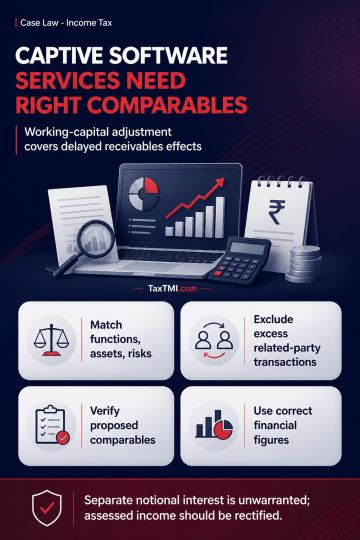
Working-capital adjustment subsumes delayed-receivable effects in TNMM benchmarking of captive software-development services, avoiding separate notion...
Transfer-pricing comparability requires exclusion of financially illogical super-profit comparables and correction of unsupported annual-report and ma...
Charitable character assessment preserves Section 80G approval despite inclusive spiritual teachings and incidental religious expenditure within the s...
Penalty proceedings for cash-loan acceptance require assessment proceedings and recorded Assessing Officer satisfaction; absent these, the proceedings...
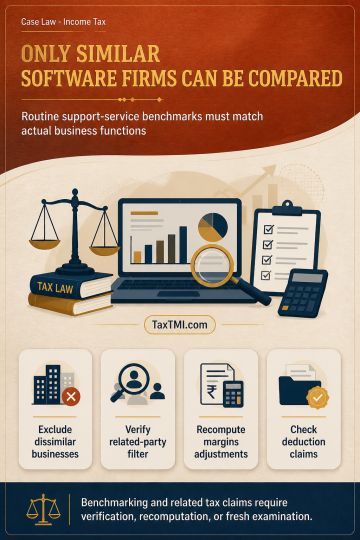
Functional comparability governs software-service benchmarking: dissimilar companies are excluded, while related-party filters, margins and working-ca...
Bareboat charter arrangements for hiring dredgers, vessels and allied equipment involved transfer of right to possession and effective control, so the transactions did not fall within taxable supply of tangible goods service and, after 1 July 2012, were also not taxable as a declared service. The Tribunal held that the demand for service tax, interest and penalties failed because the authorities proceeded on the incorrect premise that there was no transfer of right to use. It further relied on the finality of the assessee's earlier decision on identical transactions, which bound the parties and independently supported setting aside the demand.
Bareboat charter arrangements for hiring dredgers, vessels and allied equipment involved transfer of right to possession and effective control, so the transactions did not fall within taxable supply of tangible goods service and, after 1 July 2012, were also not taxable as a declared service. The Tribunal held that the demand for service tax, interest and penalties failed because the authorities proceeded on the incorrect premise that there was no transfer of right to use. It further relied on the finality of the assessee's earlier decision on identical transactions, which bound the parties and independently supported setting aside the demand.
Note: It is a system-generated summary and is for quick reference only.
 TaxTMI
  TaxTMI
 of 4826










 Join Channel


