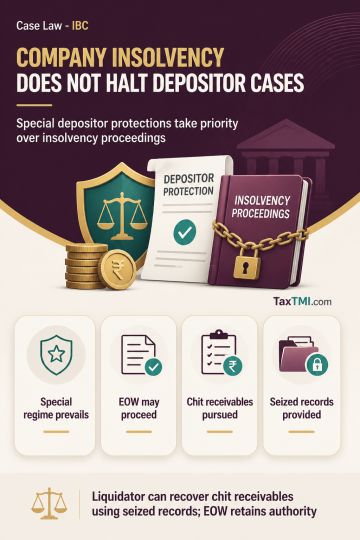
Depositor-protection proceedings prevail over corporate insolvency, while liquidators may recover chit receivables using copies of seized company reco...
Intermediary service classification fails where overseas admission facilitation is supplied independently, preserving export treatment and small-provi...
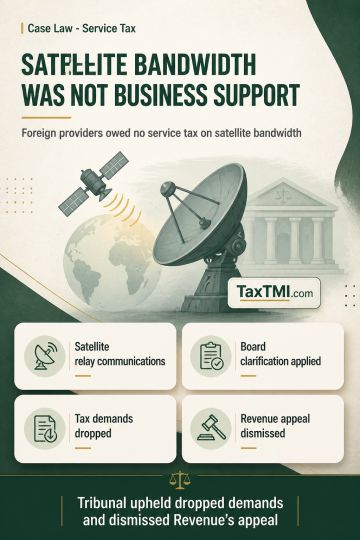
Satellite transponder bandwidth is telecommunication, not Business Support Service; foreign non-telegraph providers triggered no service tax liability...
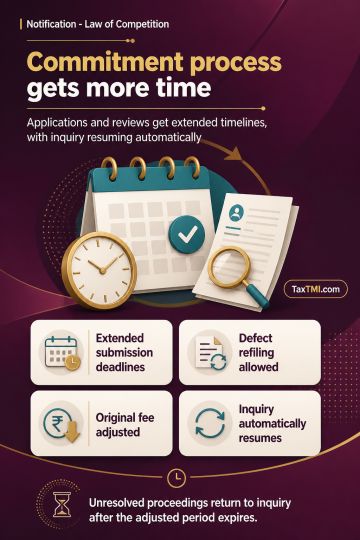
Commitment proceedings gain extended timelines, structured defect refiling, and automatic resumption of inquiry after the adjusted completion period e...
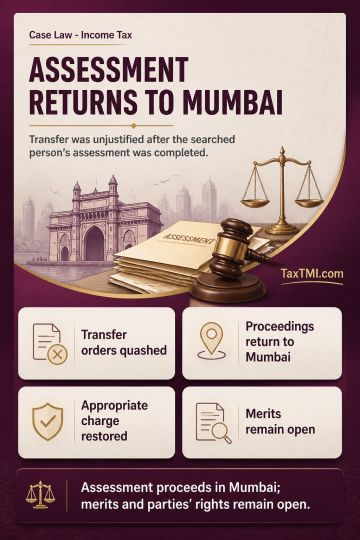
Centralised assessment transfer becomes unwarranted once the searched person's assessment is complete, requiring restoration to the appropriate charge...
Entities registered as societies were treated as governmental authorities because they were established and wholly controlled by the Haryana Government to perform citizen-facing statutory functions through e-governance, and the amounts collected were statutory fees rather than commercial consideration. On that basis, services relating to municipal functions under Notification No. 25/2012-ST were exempt, so the service tax demand on merits failed. The Tribunal also found no suppression or intent to evade tax: the dispute was interpretational, the activities were in the public domain, and the entities acted under bona fide belief. The extended period and consequential penalties under Sections 77 and 78 were therefore unsustainable.
Entities registered as societies were treated as governmental authorities because they were established and wholly controlled by the Haryana Government to perform citizen-facing statutory functions through e-governance, and the amounts collected were statutory fees rather than commercial consideration. On that basis, services relating to municipal functions under Notification No. 25/2012-ST were exempt, so the service tax demand on merits failed. The Tribunal also found no suppression or intent to evade tax: the dispute was interpretational, the activities were in the public domain, and the entities acted under bona fide belief. The extended period and consequential penalties under Sections 77 and 78 were therefore unsustainable.
Note: It is a system-generated summary and is for quick reference only.
 TaxTMI
  TaxTMI
 of 4826











 Join Channel


