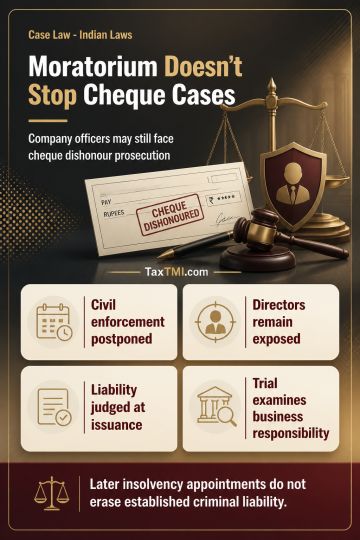
Insolvency moratorium does not shield company officers from cheque dishonour prosecution for liability arising before corporate insolvency proceedings...
Advance-ruling mechanism governs pending GST classification, exemption and taxability disputes, limiting writ review once the specialised forum functi...
Statutory appeals were rejected as time-barred because the delay exceeded the condonable period, and the High Court found no legal basis to interfere with that appellate rejection. The dispute concerned GST assessment orders arising from return mismatches, with intimations already issued, so no further interference was warranted on that record. However, on the petitioners' express consent, the Court directed fresh adjudication on merits after payment of the balance disputed tax or required disputed tax, as applicable, and filing replies with supporting documents; the impugned orders were treated as addenda to the show cause notices. Any bank attachment was to stand vacated only upon compliance with those conditions.
Statutory appeals were rejected as time-barred because the delay exceeded the condonable period, and the High Court found no legal basis to interfere with that appellate rejection. The dispute concerned GST assessment orders arising from return mismatches, with intimations already issued, so no further interference was warranted on that record. However, on the petitioners' express consent, the Court directed fresh adjudication on merits after payment of the balance disputed tax or required disputed tax, as applicable, and filing replies with supporting documents; the impugned orders were treated as addenda to the show cause notices. Any bank attachment was to stand vacated only upon compliance with those conditions.
Note: It is a system-generated summary and is for quick reference only.
 TaxTMI
  TaxTMI
 of 4816



 Join Channel