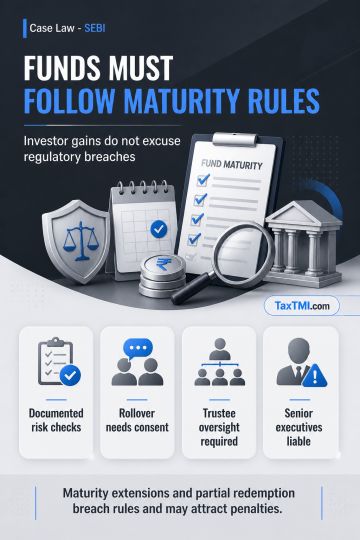
Mutual fund maturity rules require proper rollover, redemption, disclosure, and due diligence; investor gains cannot excuse regulatory breaches or pen...
Threshold exemption excludes exempt services, while stamp-paper purchases avoid reverse charge; consequential service tax penalties were also set asid...
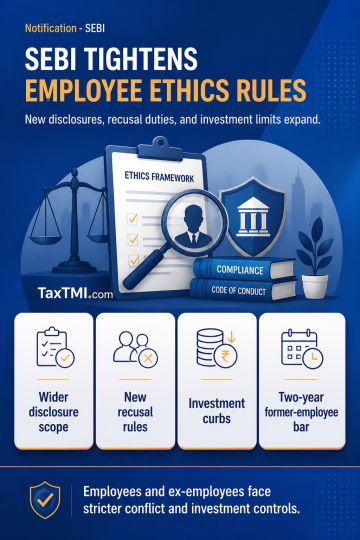
Employee conflict disclosures and investment restrictions expand with new recusal duties, post-employment limits, and compliance reporting requirement...
Sections 89(1) and 174(2)(e) of the CGST Act could be used only to recover liabilities that had already crystallised under the earlier regime. The High Court held that Section 87 of the Finance Act, 1994 did not permit recovery of a company's tax dues from its directors' personal assets, and the garnishee power in Section 87(b)(i) could not justify attachment of a director's personal bank account for the company's liability. Recovery could proceed only for the separate penalty imposed on the director under Section 78A, and because that penalty had been paid, the lien over the remaining balance was unsustainable.
Sections 89(1) and 174(2)(e) of the CGST Act could be used only to recover liabilities that had already crystallised under the earlier regime. The High Court held that Section 87 of the Finance Act, 1994 did not permit recovery of a company's tax dues from its directors' personal assets, and the garnishee power in Section 87(b)(i) could not justify attachment of a director's personal bank account for the company's liability. Recovery could proceed only for the separate penalty imposed on the director under Section 78A, and because that penalty had been paid, the lien over the remaining balance was unsustainable.
Note: It is a system-generated summary and is for quick reference only.
 TaxTMI
  TaxTMI
 of 4816












 Join Channel


