Clean slate principle extinguishes uncrystallised operational claims and bars continuation of pending recovery and arbitral proceedings after plan app...
Works contract classification governs composite layout-development contracts where VAT-paid goods are transferred alongside construction and infrastru...
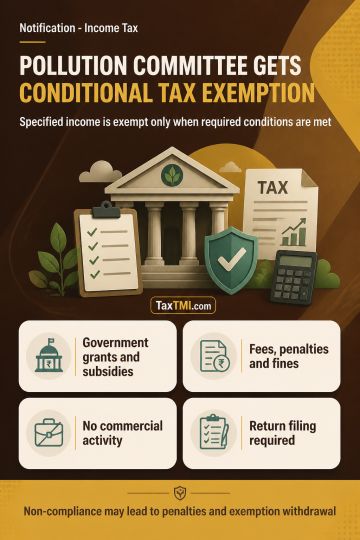
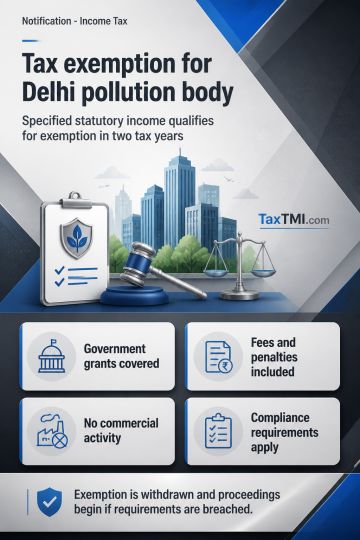
Specified income tax exemption for pollution control body remains conditional on non-commercial activity, unchanged income character, and return filin...
Jurisdictional facts in certificate-of-origin discrepancies can support customs show-cause proceedings, leaving factual explanations for departmental ...
Sections 89(1) and 174(2)(e) of the CGST Act could be used only to recover liabilities that had already crystallised under the earlier regime. The High Court held that Section 87 of the Finance Act, 1994 did not permit recovery of a company's tax dues from its directors' personal assets, and the garnishee power in Section 87(b)(i) could not justify attachment of a director's personal bank account for the company's liability. Recovery could proceed only for the separate penalty imposed on the director under Section 78A, and because that penalty had been paid, the lien over the remaining balance was unsustainable.
Sections 89(1) and 174(2)(e) of the CGST Act could be used only to recover liabilities that had already crystallised under the earlier regime. The High Court held that Section 87 of the Finance Act, 1994 did not permit recovery of a company's tax dues from its directors' personal assets, and the garnishee power in Section 87(b)(i) could not justify attachment of a director's personal bank account for the company's liability. Recovery could proceed only for the separate penalty imposed on the director under Section 78A, and because that penalty had been paid, the lien over the remaining balance was unsustainable.
Note: It is a system-generated summary and is for quick reference only.
 TaxTMI
  TaxTMI
 of 4817












 Join Channel