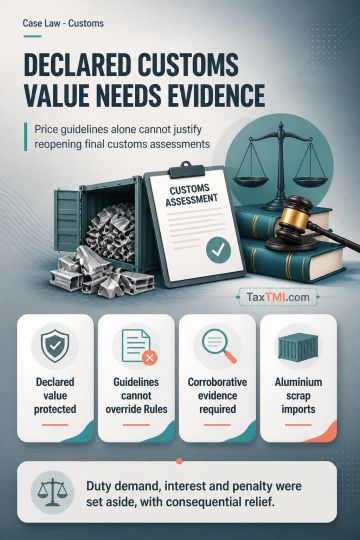
Transaction value cannot be rejected solely on non-statutory valuation guidelines without corroborative evidence supporting reassessment of final cust...
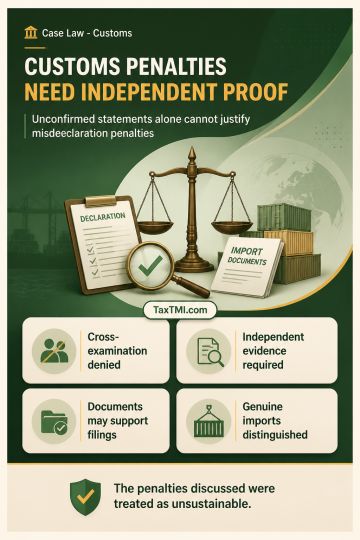
Cross-examination rights and corroborated evidence limit customs penalties for misdeclaration in genuine import transactions involving documented clea...
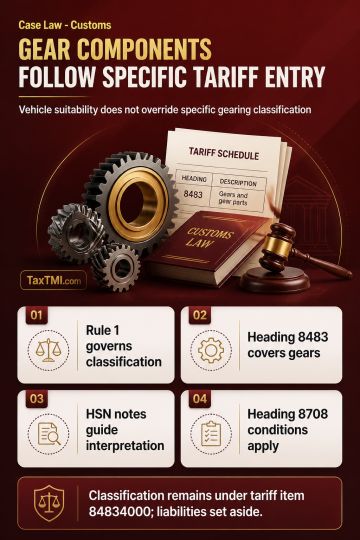
Tariff classification of vehicle gear components follows the specific gearing entry, displacing motor-vehicle parts classification and related liabili...
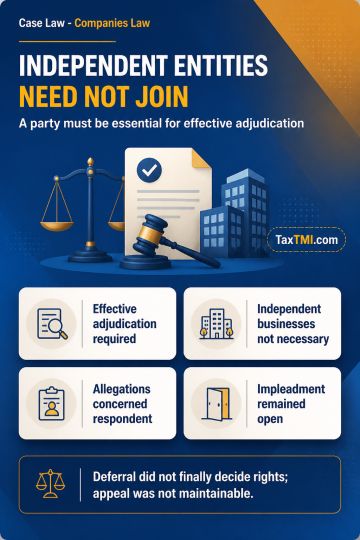
Necessary-party requirements limit impleadment of independent entities, while deferred consideration does not create an appealable adverse determinati...
Sections 89(1) and 174(2)(e) of the CGST Act could be used only to recover liabilities that had already crystallised under the earlier regime. The High Court held that Section 87 of the Finance Act, 1994 did not permit recovery of a company's tax dues from its directors' personal assets, and the garnishee power in Section 87(b)(i) could not justify attachment of a director's personal bank account for the company's liability. Recovery could proceed only for the separate penalty imposed on the director under Section 78A, and because that penalty had been paid, the lien over the remaining balance was unsustainable.
Sections 89(1) and 174(2)(e) of the CGST Act could be used only to recover liabilities that had already crystallised under the earlier regime. The High Court held that Section 87 of the Finance Act, 1994 did not permit recovery of a company's tax dues from its directors' personal assets, and the garnishee power in Section 87(b)(i) could not justify attachment of a director's personal bank account for the company's liability. Recovery could proceed only for the separate penalty imposed on the director under Section 78A, and because that penalty had been paid, the lien over the remaining balance was unsustainable.
Note: It is a system-generated summary and is for quick reference only.
 TaxTMI
  TaxTMI
 of 4819





 Join Channel


