Composite residential flat exemption upheld where supplementary agreement merged adjoining units and additional evidence supported the taxpayer's inve...
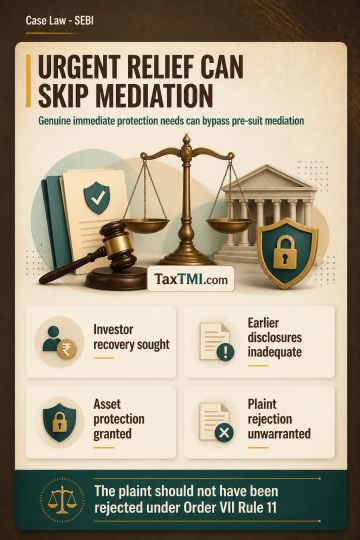
Urgent interim relief exception permits commercial suit without pre-institution mediation where immediate disclosure and asset protection are genuinel...
Sections 89(1) and 174(2)(e) of the CGST Act could be used only to recover liabilities that had already crystallised under the earlier regime. The High Court held that Section 87 of the Finance Act, 1994 did not permit recovery of a company's tax dues from its directors' personal assets, and the garnishee power in Section 87(b)(i) could not justify attachment of a director's personal bank account for the company's liability. Recovery could proceed only for the separate penalty imposed on the director under Section 78A, and because that penalty had been paid, the lien over the remaining balance was unsustainable.
Sections 89(1) and 174(2)(e) of the CGST Act could be used only to recover liabilities that had already crystallised under the earlier regime. The High Court held that Section 87 of the Finance Act, 1994 did not permit recovery of a company's tax dues from its directors' personal assets, and the garnishee power in Section 87(b)(i) could not justify attachment of a director's personal bank account for the company's liability. Recovery could proceed only for the separate penalty imposed on the director under Section 78A, and because that penalty had been paid, the lien over the remaining balance was unsustainable.
Note: It is a system-generated summary and is for quick reference only.
 TaxTMI
  TaxTMI
 of 4828






 Join Channel