Development agreements require legal possession or effective enjoyment for capital gains transfer; permissive possession and deferred consideration de...
Prolonged sterilisation of development rights supports capital-gains treatment, while business-income disallowances cannot govern capital-gains comput...
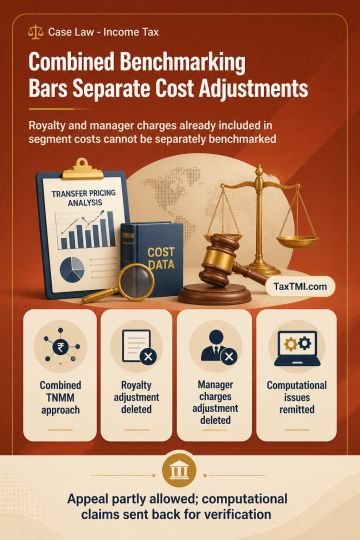
Additional evidence in transfer pricing dispute leads to fresh examination, while tax deductions, TDS credit, fee and refund interest require verifica...
Category II AIF pass-through taxation preserves non-business income character; investment receipts cannot be reclassified without applying recognised ...
Mutual fund maturity rules require proper rollover, redemption, disclosure, and due diligence; investor gains cannot excuse regulatory breaches or pen...
Page of 4813
Press 'Enter' after typing page number.
1461 to 1480 of 96257 Results
❮
❯
❯❯
0 / 200
Expand Note
Add to Folder
No Folders have been created
+
Are you sure you want to delete "My most important" ?
Under the EPCG exemption, Notification No. 97/2004-Cus. had to be read with the Foreign Trade Policy, and the dispute was confined to whether third-party exports could satisfy export obligation. The Tribunal found that, at the material time, the provisions were ambiguous on whether such exports had to be made from goods manufactured using the imported capital goods, and a later policy tightening could not be applied retrospectively. As the export obligation discharge certificate had been restored and the validity of the licence, installation of capital goods and their use were not in dispute, Customs could not sustain demand and penalties by re-agitating fulfilment of export obligation for the two licences. The demand and penalties for those imports were set aside.
Under the EPCG exemption, Notification No. 97/2004-Cus. had to be read with the Foreign Trade Policy, and the dispute was confined to whether third-party exports could satisfy export obligation. The Tribunal found that, at the material time, the provisions were ambiguous on whether such exports had to be made from goods manufactured using the imported capital goods, and a later policy tightening could not be applied retrospectively. As the export obligation discharge certificate had been restored and the validity of the licence, installation of capital goods and their use were not in dispute, Customs could not sustain demand and penalties by re-agitating fulfilment of export obligation for the two licences. The demand and penalties for those imports were set aside.
Note: It is a system-generated summary and is for quick reference only.
 TaxTMI
  TaxTMI
 of 4813















 Join Channel