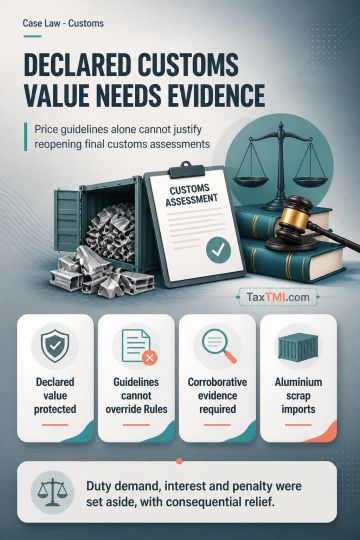
Transaction value cannot be rejected solely on non-statutory valuation guidelines without corroborative evidence supporting reassessment of final cust...
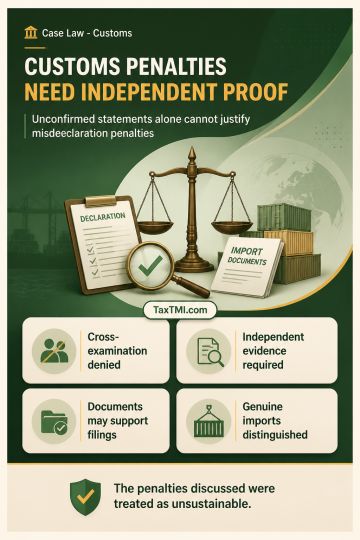
Cross-examination rights and corroborated evidence limit customs penalties for misdeclaration in genuine import transactions involving documented clea...
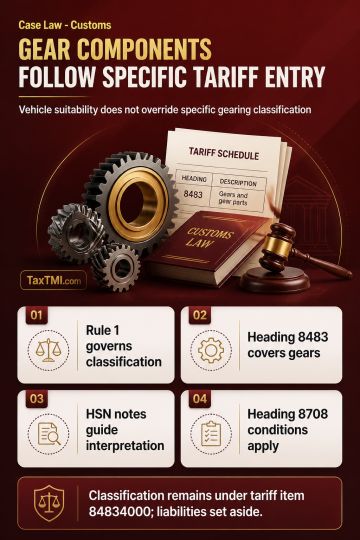
Tariff classification of vehicle gear components follows the specific gearing entry, displacing motor-vehicle parts classification and related liabili...
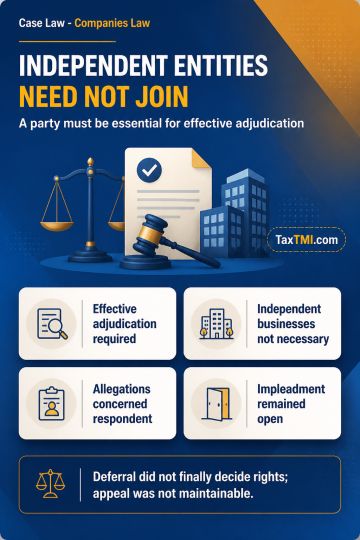
Necessary-party requirements limit impleadment of independent entities, while deferred consideration does not create an appealable adverse determinati...
Food supplement classification requires common parlance and authoritative tests, preventing treatment as proprietary Ayurvedic medicines without suppo...
Under the EPCG exemption, Notification No. 97/2004-Cus. had to be read with the Foreign Trade Policy, and the dispute was confined to whether third-party exports could satisfy export obligation. The Tribunal found that, at the material time, the provisions were ambiguous on whether such exports had to be made from goods manufactured using the imported capital goods, and a later policy tightening could not be applied retrospectively. As the export obligation discharge certificate had been restored and the validity of the licence, installation of capital goods and their use were not in dispute, Customs could not sustain demand and penalties by re-agitating fulfilment of export obligation for the two licences. The demand and penalties for those imports were set aside.
Under the EPCG exemption, Notification No. 97/2004-Cus. had to be read with the Foreign Trade Policy, and the dispute was confined to whether third-party exports could satisfy export obligation. The Tribunal found that, at the material time, the provisions were ambiguous on whether such exports had to be made from goods manufactured using the imported capital goods, and a later policy tightening could not be applied retrospectively. As the export obligation discharge certificate had been restored and the validity of the licence, installation of capital goods and their use were not in dispute, Customs could not sustain demand and penalties by re-agitating fulfilment of export obligation for the two licences. The demand and penalties for those imports were set aside.
Note: It is a system-generated summary and is for quick reference only.
 TaxTMI
  TaxTMI
 of 4816













 Join Channel


