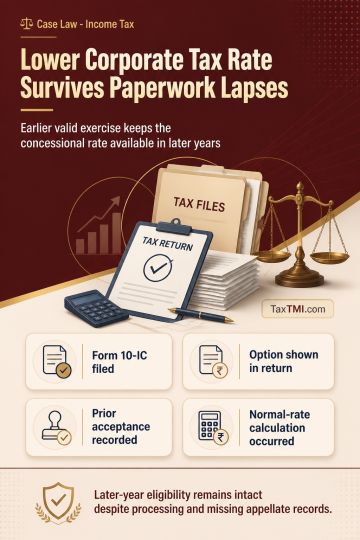
Concessional corporate tax option under section 115BAA survives procedural documentary lapses when statutory compliance and earlier exercise are estab...
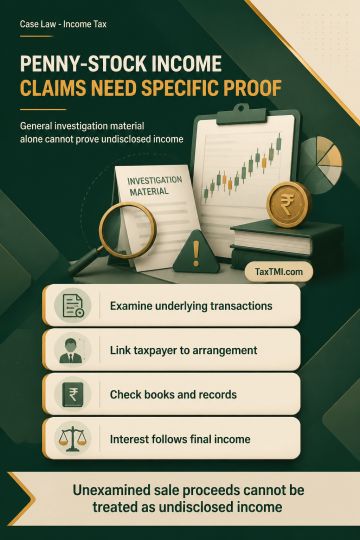
Penny-stock additions require transaction-specific evidence; general investigation material alone cannot establish undisclosed income or accommodation...
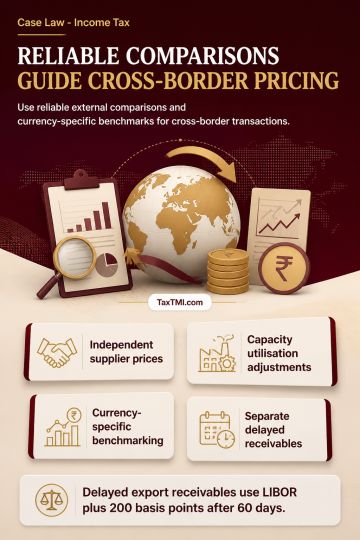
Transfer pricing comparability prioritises reliable external CUPs and foreign-currency LIBOR benchmarks for exports, borrowings and delayed receivable...
Section 153C satisfaction and seized electronic records sustained unexplained-investment addition, subject to proportionate ownership-share verificati...
Corporate guarantees executed by the corporate debtor were held to constitute financial debt under Section 5(8) of the Code because liabilities under guarantees for money borrowed against payment of interest fall within that definition. The Court accepted that the guarantees were in existence and had been verified, and held that non-disclosure in financial statements did not defeat the substantive claim. It further held that non-submission before the NCLT was not fatal, since documents could be produced on appeal and the resolution professional was entitled to verify claims. Insufficient stamping was treated as a curable defect, not a ground to render the guarantees unenforceable. The concurrent findings rejecting the claims were found perverse and were set aside, with directions to include the appellants in the committee of creditors.
Corporate guarantees executed by the corporate debtor were held to constitute financial debt under Section 5(8) of the Code because liabilities under guarantees for money borrowed against payment of interest fall within that definition. The Court accepted that the guarantees were in existence and had been verified, and held that non-disclosure in financial statements did not defeat the substantive claim. It further held that non-submission before the NCLT was not fatal, since documents could be produced on appeal and the resolution professional was entitled to verify claims. Insufficient stamping was treated as a curable defect, not a ground to render the guarantees unenforceable. The concurrent findings rejecting the claims were found perverse and were set aside, with directions to include the appellants in the committee of creditors.
Note: It is a system-generated summary and is for quick reference only.
 TaxTMI
  TaxTMI
 of 4826









 Join Channel


