Political contribution deductions require genuine transactions; banking records and party registration alone cannot defeat evidence of accommodation e...
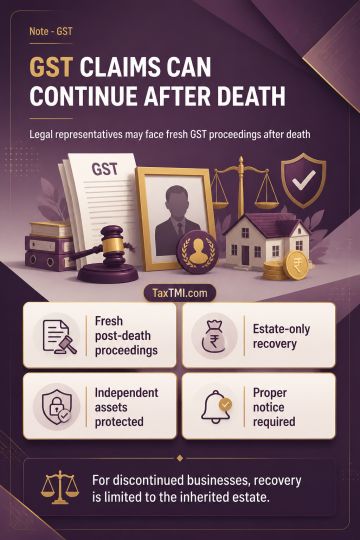
Post-death GST liability permits fresh proceedings against legal representatives, while discontinued-business recovery remains limited to the inherite...
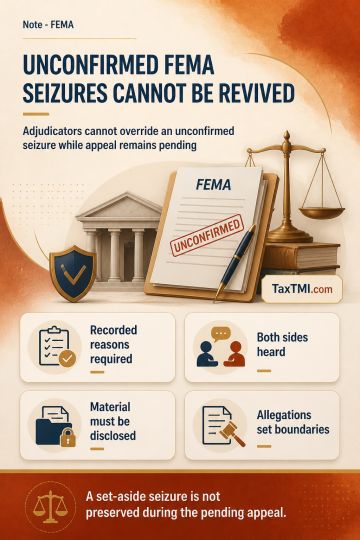
Non-confirmation of FEMA seizure prevents adjudicators from overriding pending appellate findings on recorded reasons and suspected foreign asset hold...
In a back-to-back construction contract, the NCLAT held that where the corporate debtor was entitled only to a 4% margin and had assigned the risks, liabilities and profit share to the sub-contractor, the remaining 96% of receivables from the principal employer belonged to the sub-contractor and was held in trust outside the liquidation estate under section 36(4)(a)(i). It also held that, because the project continued during CIRP to keep the corporate debtor as a going concern, the sub-contractor's running bills formed part of CIRP costs rather than operational debt, and no claim in Form C was required. Interest on the withheld amount was confined to simple interest at 9% up to the date of the impugned order.
In a back-to-back construction contract, the NCLAT held that where the corporate debtor was entitled only to a 4% margin and had assigned the risks, liabilities and profit share to the sub-contractor, the remaining 96% of receivables from the principal employer belonged to the sub-contractor and was held in trust outside the liquidation estate under section 36(4)(a)(i). It also held that, because the project continued during CIRP to keep the corporate debtor as a going concern, the sub-contractor's running bills formed part of CIRP costs rather than operational debt, and no claim in Form C was required. Interest on the withheld amount was confined to simple interest at 9% up to the date of the impugned order.
Note: It is a system-generated summary and is for quick reference only.
 TaxTMI
  TaxTMI
 of 4918