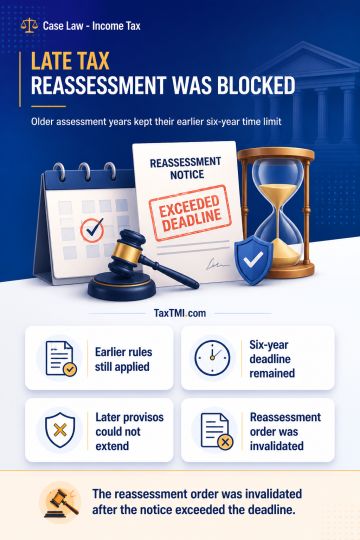
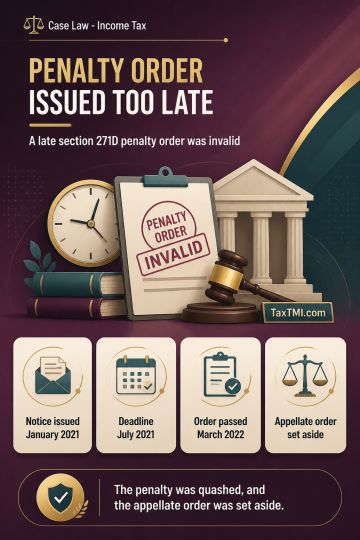
Pre-amendment reassessment limitation bars late notices under the preserved regime, invalidating consequential reassessment for affected earlier asses...
Cash-sales explanations for bank deposits require documentary reconciliation; reassessment notice survived where effective response time was available...
Functional comparability in transfer pricing prevents ad hoc arm's length adjustments where functions, assets, risks and reliable comparables are unes...
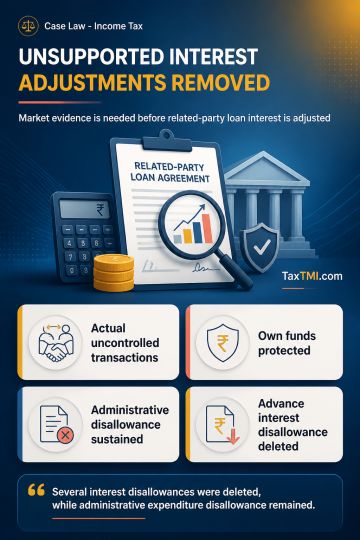
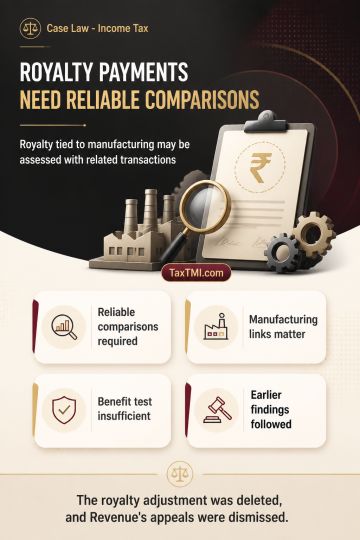
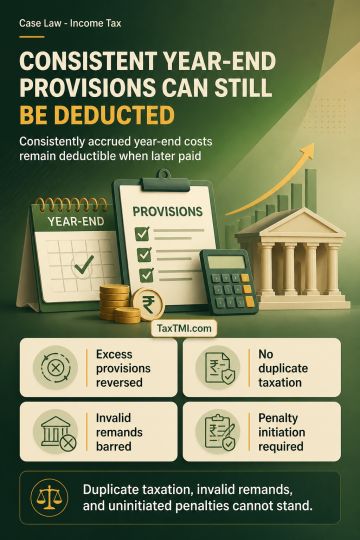
Contingency expenses, exempt-income disallowance, and royalty benchmarking: unsupported adjustments were deleted under consistent accounting and trans...
No transfer pricing adjustment could be sustained on the notional value of employee stock options granted by a parent company to the assessee's employees, because the assessee had not actually incurred any expenditure or assumed any liability for acquiring the shares. The Tribunal applied Rule 10B(1)(e)(i) and held that net profit margin under TNMM must be computed with reference to costs actually incurred, meaning a real financial outflow or obligation. Since the TDS reimbursement was made without mark-up and no ESOP cost was recorded in the books, imputation of a hypothetical cost was contrary to the transfer pricing rules. The adjustment relating to Restricted Stock Units was deleted.
No transfer pricing adjustment could be sustained on the notional value of employee stock options granted by a parent company to the assessee's employees, because the assessee had not actually incurred any expenditure or assumed any liability for acquiring the shares. The Tribunal applied Rule 10B(1)(e)(i) and held that net profit margin under TNMM must be computed with reference to costs actually incurred, meaning a real financial outflow or obligation. Since the TDS reimbursement was made without mark-up and no ESOP cost was recorded in the books, imputation of a hypothetical cost was contrary to the transfer pricing rules. The adjustment relating to Restricted Stock Units was deleted.
Note: It is a system-generated summary and is for quick reference only.
 TaxTMI
  TaxTMI
 of 4918