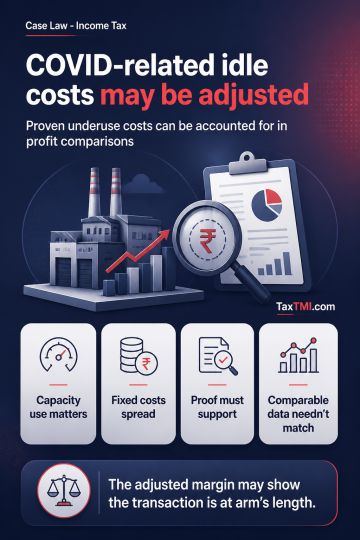
Capacity-utilisation adjustments under TNMM can neutralise substantiated COVID-related idle costs where underutilisation materially affects profitabil...
TNMM functional comparability requires excluding rice manufacturers from a pure Basmati rice trader's benchmark and recognising operating export recei...
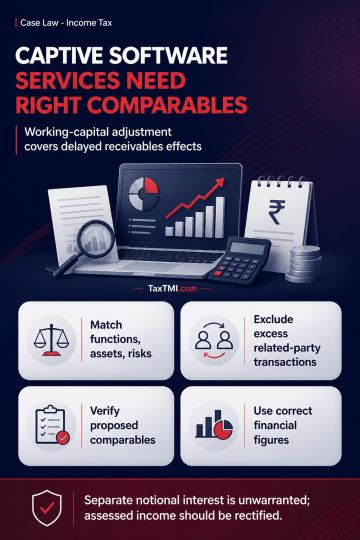
Working-capital adjustment subsumes delayed-receivable effects in TNMM benchmarking of captive software-development services, avoiding separate notion...
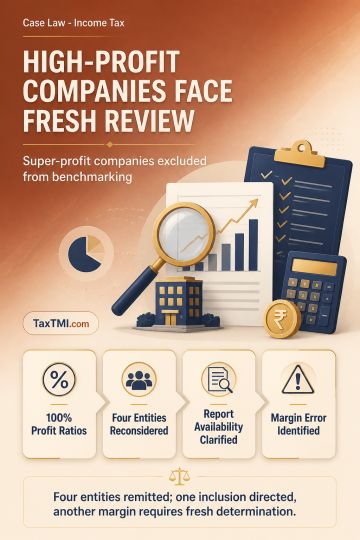
Transfer-pricing comparability requires exclusion of financially illogical super-profit comparables and correction of unsupported annual-report and ma...
Charitable character assessment preserves Section 80G approval despite inclusive spiritual teachings and incidental religious expenditure within the s...
Penalty proceedings for cash-loan acceptance require assessment proceedings and recorded Assessing Officer satisfaction; absent these, the proceedings...
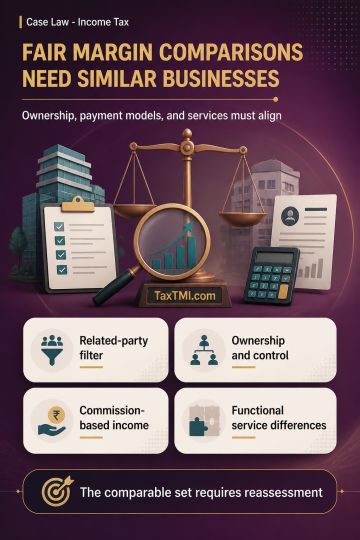
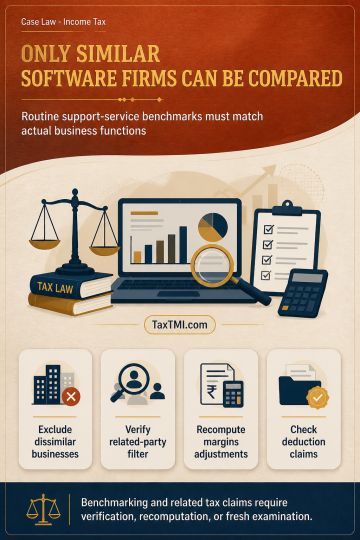
Functional comparability governs software-service benchmarking: dissimilar companies are excluded, while related-party filters, margins and working-ca...
Under Rule 10B, uncontrolled comparables are usable only where material differences do not affect price, cost or profit, or where reasonably accurate adjustments remove their effect. Because the assessee's purchases were largely imported and bore substantial import duty, while the comparables had negligible import content, the duty element materially distorted the resale price method comparison. The Tribunal therefore directed exclusion of import duty from operating cost when computing PLI and ALP, following the Swatch Group principle. It also allowed working capital adjustment, subject to the assessee furnishing necessary details before the TPO. The penalty ground was treated as premature, and the appeal was partly allowed.
Under Rule 10B, uncontrolled comparables are usable only where material differences do not affect price, cost or profit, or where reasonably accurate adjustments remove their effect. Because the assessee's purchases were largely imported and bore substantial import duty, while the comparables had negligible import content, the duty element materially distorted the resale price method comparison. The Tribunal therefore directed exclusion of import duty from operating cost when computing PLI and ALP, following the Swatch Group principle. It also allowed working capital adjustment, subject to the assessee furnishing necessary details before the TPO. The penalty ground was treated as premature, and the appeal was partly allowed.
Note: It is a system-generated summary and is for quick reference only.
 TaxTMI
  TaxTMI
 of 4826










 Join Channel


