Development agreements require legal possession or effective enjoyment for capital gains transfer; permissive possession and deferred consideration de...
Prolonged sterilisation of development rights supports capital-gains treatment, while business-income disallowances cannot govern capital-gains comput...
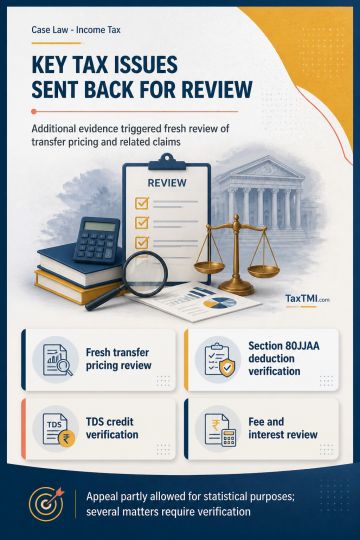
Additional evidence in transfer pricing dispute leads to fresh examination, while tax deductions, TDS credit, fee and refund interest require verifica...
Category II AIF pass-through taxation preserves non-business income character; investment receipts cannot be reclassified without applying recognised ...
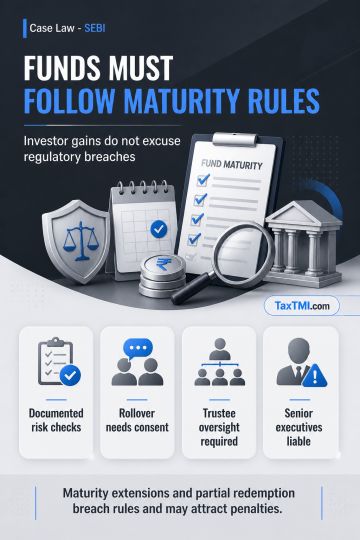
Mutual fund maturity rules require proper rollover, redemption, disclosure, and due diligence; investor gains cannot excuse regulatory breaches or pen...
Page of 4813
Press 'Enter' after typing page number.
1461 to 1480 of 96257 Results
❮
❯
❯❯
0 / 200
Expand Note
Add to Folder
No Folders have been created
+
Are you sure you want to delete "My most important" ?
Non-injurious price in anti-dumping proceedings had to be disclosed with sufficient factual detail before final findings, because the calculation directly affected normal value, injury margin and the recommendation of nil duty. The Tribunal found that the disclosure statement did not explain the methodology or basis of the working, so the exporter could not effectively respond; disclosure after final findings caused prejudice and the nil-duty recommendation was set aside and remitted for fresh determination with reasonable opportunity. On product scope, semi-finished ophthalmic lenses with refractive index above 1.6 were upheld as excluded from the product under consideration because the domestic industry did not actually produce that category and the items were not technically or commercially substitutable.
Non-injurious price in anti-dumping proceedings had to be disclosed with sufficient factual detail before final findings, because the calculation directly affected normal value, injury margin and the recommendation of nil duty. The Tribunal found that the disclosure statement did not explain the methodology or basis of the working, so the exporter could not effectively respond; disclosure after final findings caused prejudice and the nil-duty recommendation was set aside and remitted for fresh determination with reasonable opportunity. On product scope, semi-finished ophthalmic lenses with refractive index above 1.6 were upheld as excluded from the product under consideration because the domestic industry did not actually produce that category and the items were not technically or commercially substitutable.
Note: It is a system-generated summary and is for quick reference only.
 TaxTMI
  TaxTMI
 of 4813

















 Join Channel