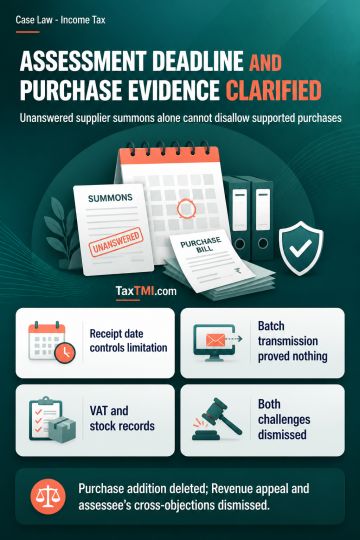
Limitation for consequential assessments runs from prescribed authority receipt, while verified purchases cannot be disallowed merely for unanswered s...
Higher depreciation for qualifying commercial vehicles, exempt-income disallowance, research deduction verification, and club-expense treatment clarif...
Charitable registration renewal cannot become an assessment of receipts, profitability or annual exemption compliance, requiring renewal and donation ...
AMP expenditure for own business is not an international transaction without an associated-enterprise arrangement, eliminating transfer pricing adjust...
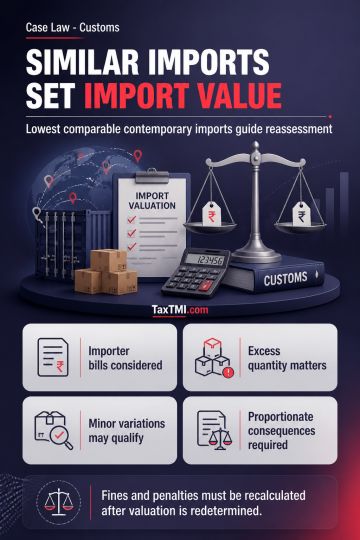
Customs valuation must use comparable contemporary imports, while confiscation fines and penalties require proportionate recalculation on reassessed v...
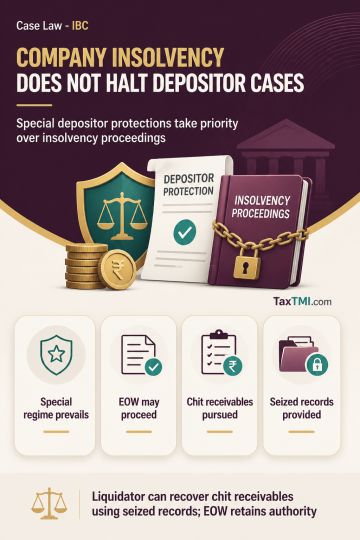
Depositor-protection proceedings prevail over corporate insolvency, while liquidators may recover chit receivables using copies of seized company reco...
Non-injurious price in anti-dumping proceedings had to be disclosed with sufficient factual detail before final findings, because the calculation directly affected normal value, injury margin and the recommendation of nil duty. The Tribunal found that the disclosure statement did not explain the methodology or basis of the working, so the exporter could not effectively respond; disclosure after final findings caused prejudice and the nil-duty recommendation was set aside and remitted for fresh determination with reasonable opportunity. On product scope, semi-finished ophthalmic lenses with refractive index above 1.6 were upheld as excluded from the product under consideration because the domestic industry did not actually produce that category and the items were not technically or commercially substitutable.
Non-injurious price in anti-dumping proceedings had to be disclosed with sufficient factual detail before final findings, because the calculation directly affected normal value, injury margin and the recommendation of nil duty. The Tribunal found that the disclosure statement did not explain the methodology or basis of the working, so the exporter could not effectively respond; disclosure after final findings caused prejudice and the nil-duty recommendation was set aside and remitted for fresh determination with reasonable opportunity. On product scope, semi-finished ophthalmic lenses with refractive index above 1.6 were upheld as excluded from the product under consideration because the domestic industry did not actually produce that category and the items were not technically or commercially substitutable.
Note: It is a system-generated summary and is for quick reference only.
 TaxTMI
  TaxTMI
 of 4821















 Join Channel