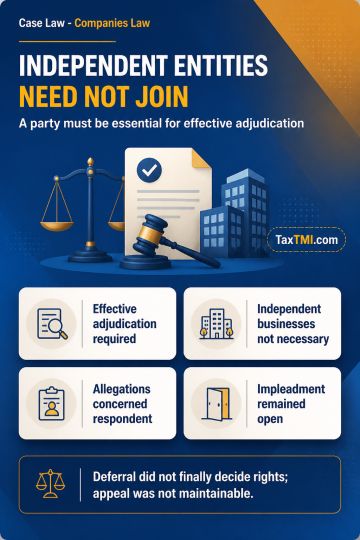
Necessary-party requirements limit impleadment of independent entities, while deferred consideration does not create an appealable adverse determinati...
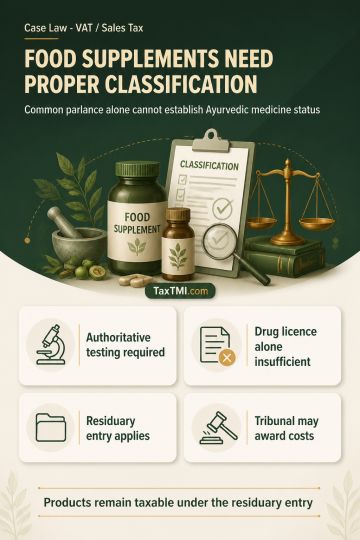
Food supplement classification requires common parlance and authoritative tests, preventing treatment as proprietary Ayurvedic medicines without suppo...
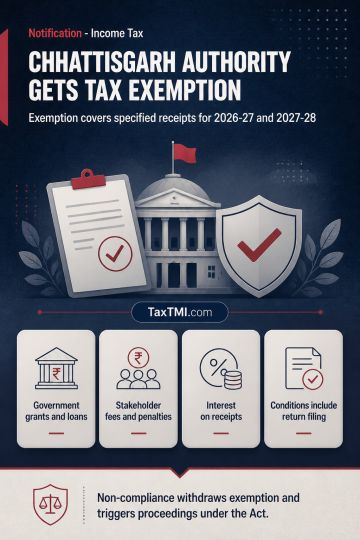
Specified regulatory authority income receives conditional tax exemption, subject to non-commercial activity, unchanged income character, and return f...
Tax exemption for regulatory authority income applies retrospectively, subject to non-commercial activity, unchanged income sources, and return-filing...
Input tax credit conditions remain constitutionally valid, with eligible recipient claims considered under GST circulars and retrospective filing dead...
Imported goods declared as apatite calcium phosphate were held classifiable under CTI 2835 26 90, because Chapter 25 covers only natural products in crude form or products processed merely mechanically or physically, while the evidence showed calcination and chemical additions. Documentary material, including supplier emails and the importer's own conduct in seeking removal of calcination references, established deliberate misdescription; the differential duty with interest was therefore upheld. Since the goods did not match the Bills of Entry, confiscation under section 111(m) and redemption fine were sustained. Intentional misclassification to evade duty attracted penalty under section 114A, and the penalties on the director and manager were also upheld for manipulating and assisting in false customs documentation.
Imported goods declared as apatite calcium phosphate were held classifiable under CTI 2835 26 90, because Chapter 25 covers only natural products in crude form or products processed merely mechanically or physically, while the evidence showed calcination and chemical additions. Documentary material, including supplier emails and the importer's own conduct in seeking removal of calcination references, established deliberate misdescription; the differential duty with interest was therefore upheld. Since the goods did not match the Bills of Entry, confiscation under section 111(m) and redemption fine were sustained. Intentional misclassification to evade duty attracted penalty under section 114A, and the penalties on the director and manager were also upheld for manipulating and assisting in false customs documentation.
Note: It is a system-generated summary and is for quick reference only.
 TaxTMI
  TaxTMI
 of 4817














 Join Channel