Commercial vehicle depreciation, scientifically determined warranty provisions and exempt-income disallowances were resolved in favour of the taxpayer...
Inherited property sale proceeds require capital-gains treatment where ownership is supported by evidence, not suspicion or unverified signature doubt...
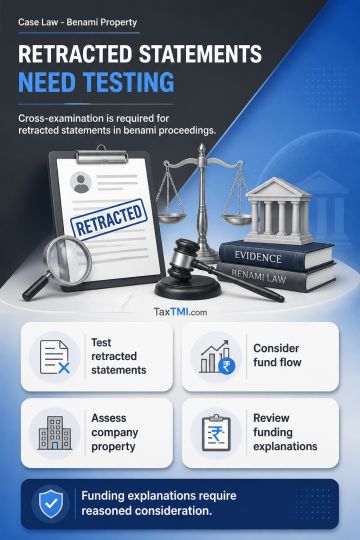
Cross-examination of retracted statements is essential where foundational evidence supports a benami allegation and documented funding explanations re...
The NCLAT held that appellants could not later complain of lack of notice or hearing where they were represented by counsel when the interlocutory applications were taken up, since knowledge of the proceedings and an opportunity to object were attributable to them. It further upheld exclusion of 208 days from the personal guarantor insolvency resolution process, ruling that the period spent in earlier appeals could be excluded to give effect to prior appellate directions and that the statutory time limit operates as a moratorium-related provision, not as a bar on exclusion of time for effective continuation of the process. The exclusion was treated as a procedural measure and the appeals were dismissed.
The NCLAT held that appellants could not later complain of lack of notice or hearing where they were represented by counsel when the interlocutory applications were taken up, since knowledge of the proceedings and an opportunity to object were attributable to them. It further upheld exclusion of 208 days from the personal guarantor insolvency resolution process, ruling that the period spent in earlier appeals could be excluded to give effect to prior appellate directions and that the statutory time limit operates as a moratorium-related provision, not as a bar on exclusion of time for effective continuation of the process. The exclusion was treated as a procedural measure and the appeals were dismissed.
Note: It is a system-generated summary and is for quick reference only.
 TaxTMI
  TaxTMI
 of 4821




















 Join Channel