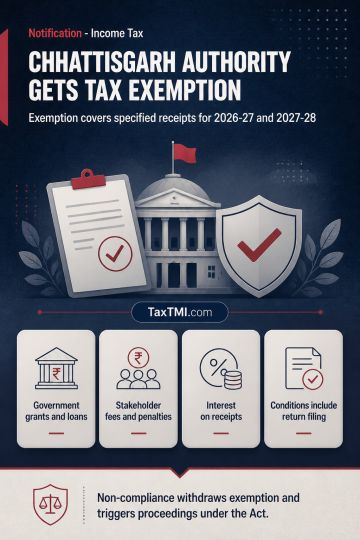
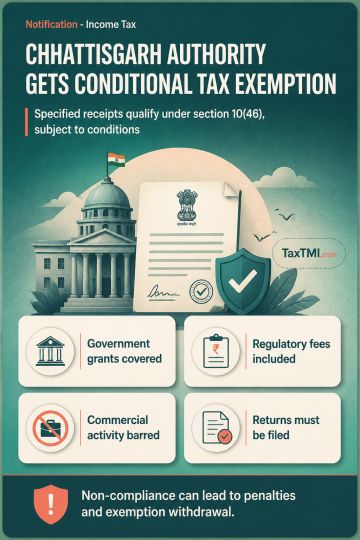
Specified regulatory authority income receives conditional tax exemption, subject to non-commercial activity, unchanged income character, and return f...
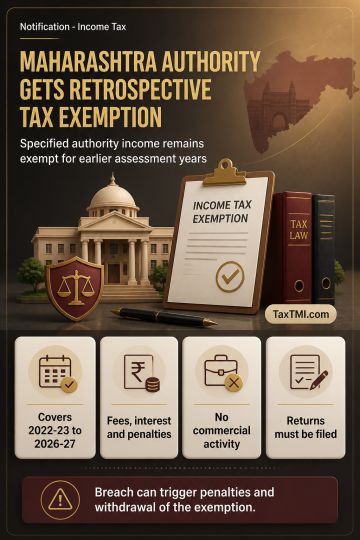
Tax exemption for regulatory authority income applies retrospectively, subject to non-commercial activity, unchanged income sources, and return-filing...
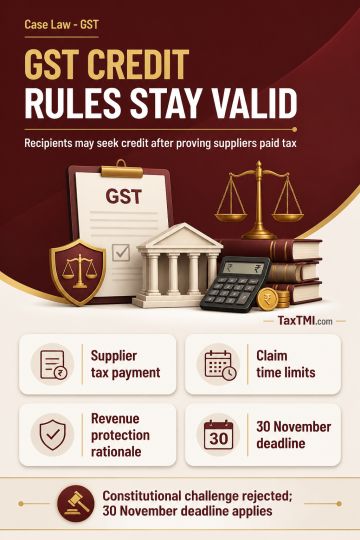
Input tax credit conditions remain constitutionally valid, with eligible recipient claims considered under GST circulars and retrospective filing dead...
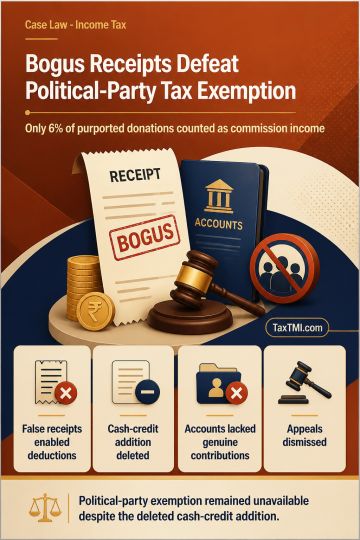
Bogus donation receipts justified commission income assessment and defeated political-party tax exemption for inaccurate accounts and reporting failur...
Pure reimbursement without income element escapes tax withholding, while delayed withholding and unsupported provisions face deferred or renewed scrut...
Public benefit requirement defeats charitable registration where residents' association services are reciprocal, member-only facilities governed by mu...
A show cause notice under the CGST Act cannot club multiple financial years into one proceeding, because liability, annual return compliance and limitation operate separately for each tax period. A single notice combining distinct years would impermissibly aggregate different due dates and limitation consequences; the impugned notice was therefore quashed. The Court also held that, within the State, its own later decisions on this point were binding, and the contrary Delhi High Court view could not prevail. The Supreme Court's in limine dismissal of the challenge to that view did not attract merger and did not displace the binding effect of the Court's decisions. Liberty was reserved to issue a fresh notice in accordance with law.
A show cause notice under the CGST Act cannot club multiple financial years into one proceeding, because liability, annual return compliance and limitation operate separately for each tax period. A single notice combining distinct years would impermissibly aggregate different due dates and limitation consequences; the impugned notice was therefore quashed. The Court also held that, within the State, its own later decisions on this point were binding, and the contrary Delhi High Court view could not prevail. The Supreme Court's in limine dismissal of the challenge to that view did not attract merger and did not displace the binding effect of the Court's decisions. Liberty was reserved to issue a fresh notice in accordance with law.
Note: It is a system-generated summary and is for quick reference only.
 TaxTMI
  TaxTMI
 of 4814









 Join Channel


