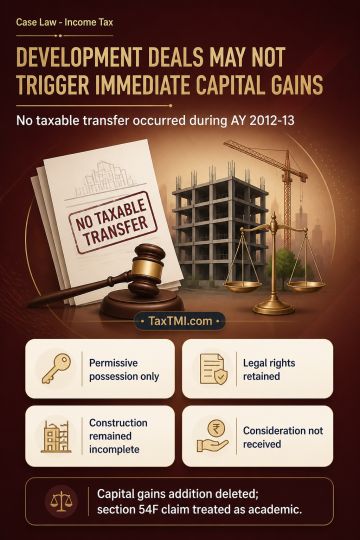
Development agreements require legal possession or effective enjoyment for capital gains transfer; permissive possession and deferred consideration de...
Prolonged sterilisation of development rights supports capital-gains treatment, while business-income disallowances cannot govern capital-gains comput...
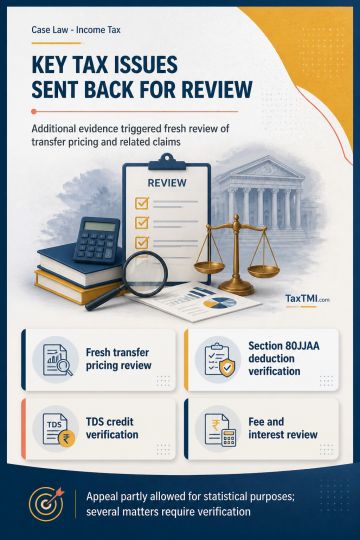
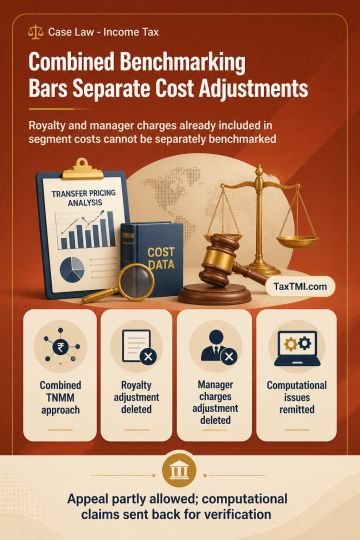
Additional evidence in transfer pricing dispute leads to fresh examination, while tax deductions, TDS credit, fee and refund interest require verifica...
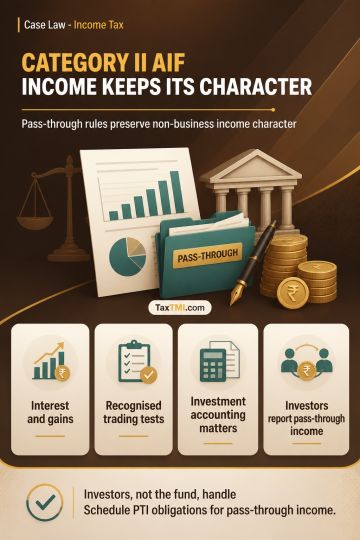
Category II AIF pass-through taxation preserves non-business income character; investment receipts cannot be reclassified without applying recognised ...
Penalty under Section 112 could not be sustained because the...
Penalty under Section 112 fails where knowledge, admissible statements, and incriminating evidence are not proved against the Customs Broker's director.
Contents
Summary
Note
Bookmark
Share
✓ Copied successfully !
Print
Print Options
For full text, please login
Login to TaxTMI
Verification Pending
The Email Id has not been verified. Click on the link we have sent on
Penalty under Section 112 could not be sustained because the Revenue failed to establish that the Customs Broker's director had knowledge of, or reason to believe in, the alleged undervaluation. The Tribunal noted that the adjudicating authority had merely repeated the show cause notice without independent reasoning, and relied on an earlier finding that the appellant was unaware of the contravention and that the incriminating material pointed to others. Statements used against the appellant had not satisfied Section 138B and therefore lacked evidentiary value, while no incriminating documents were recovered from him or the firm to connect him with the violation. The penalty was set aside and the appeal was allowed with consequential relief.
Penalty under Section 112 could not be sustained because the Revenue failed to establish that the Customs Broker's director had knowledge of, or reason to believe in, the alleged undervaluation. The Tribunal noted that the adjudicating authority had merely repeated the show cause notice without independent reasoning, and relied on an earlier finding that the appellant was unaware of the contravention and that the incriminating material pointed to others. Statements used against the appellant had not satisfied Section 138B and therefore lacked evidentiary value, while no incriminating documents were recovered from him or the firm to connect him with the violation. The penalty was set aside and the appeal was allowed with consequential relief.
Note: It is a system-generated summary and is for quick reference only.
 TaxTMI
  TaxTMI
 of 4807









 Join Channel


