Independent show-cause notices remain separate proceedings, while customs adjudication challenges should ordinarily follow the statutory appellate rem...
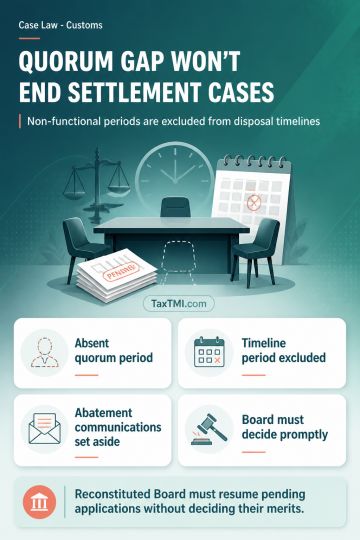
Institutional incapacity in customs settlement proceedings excludes non-functional quorum periods from statutory disposal timelines, preventing automa...
Interactive touchscreen panels with integrated computing functions fall under automatic data-processing machines rather than display monitors for cust...
Ex parte injunction service requirements were substantially met, while civil recovery and SFIO investigation into provident fund defalcation continued...
Imported food seasoning material was held classifiable under CTI 3302 10 10 as a mixture based on odoriferous substances. The Tribunal found that Heading 3302 covers mixtures of odoriferous substances, or mixtures with a basis of one or more such substances, and that the presence of parsley, spearmint and paprika oleoresin satisfied that description. It rejected the view that an odoriferous substance must be the main or predominant constituent, holding that the HSN Explanatory Notes do not impose such a requirement. The reclassification under CTI 2103 90 40 was therefore unsustainable and the appeal was allowed.
Imported food seasoning material was held classifiable under CTI 3302 10 10 as a mixture based on odoriferous substances. The Tribunal found that Heading 3302 covers mixtures of odoriferous substances, or mixtures with a basis of one or more such substances, and that the presence of parsley, spearmint and paprika oleoresin satisfied that description. It rejected the view that an odoriferous substance must be the main or predominant constituent, holding that the HSN Explanatory Notes do not impose such a requirement. The reclassification under CTI 2103 90 40 was therefore unsustainable and the appeal was allowed.
Note: It is a system-generated summary and is for quick reference only.
 TaxTMI
 of 4801




















 Join Channel


 TaxTMI