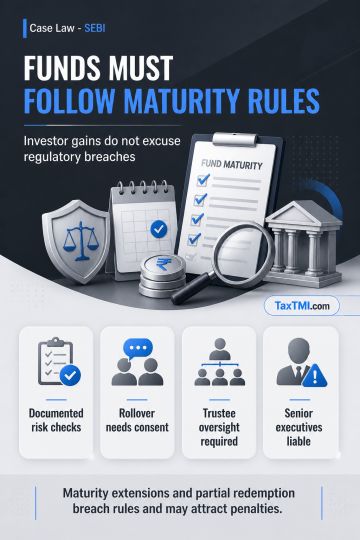
Mutual fund maturity rules require proper rollover, redemption, disclosure, and due diligence; investor gains cannot excuse regulatory breaches or pen...
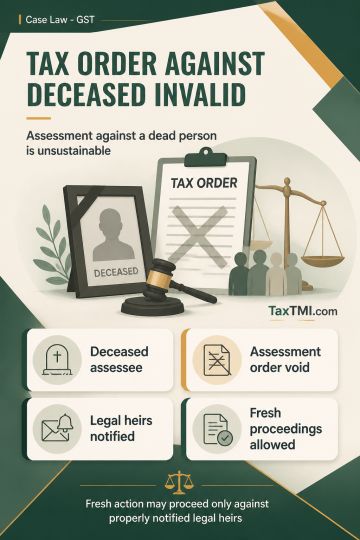
Threshold exemption excludes exempt services, while stamp-paper purchases avoid reverse charge; consequential service tax penalties were also set asid...
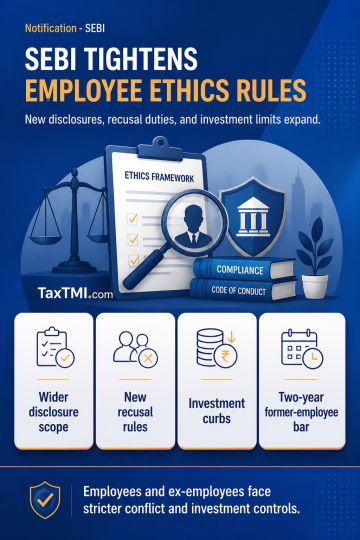
Employee conflict disclosures and investment restrictions expand with new recusal duties, post-employment limits, and compliance reporting requirement...
Illness supported by undisputed medical material was treated as sufficient cause for condoning a 36-day delay in a petition under Section 58(3) of the Companies Act, with the Tribunal noting that the explanation remained uncontroverted despite opportunity. It held that "sufficient cause" is to be construed liberally to secure decision on merits, that Section 58(3) does not create a non-condonable outer limit, and that the Limitation Act principles could apply through Section 433 read with Section 29, with Rule 11 also available to advance substantial justice. The challenge to condonation was rejected and the delay remained condoned.
Illness supported by undisputed medical material was treated as sufficient cause for condoning a 36-day delay in a petition under Section 58(3) of the Companies Act, with the Tribunal noting that the explanation remained uncontroverted despite opportunity. It held that "sufficient cause" is to be construed liberally to secure decision on merits, that Section 58(3) does not create a non-condonable outer limit, and that the Limitation Act principles could apply through Section 433 read with Section 29, with Rule 11 also available to advance substantial justice. The challenge to condonation was rejected and the delay remained condoned.
Note: It is a system-generated summary and is for quick reference only.
 TaxTMI
  TaxTMI
 of 4807













 Join Channel