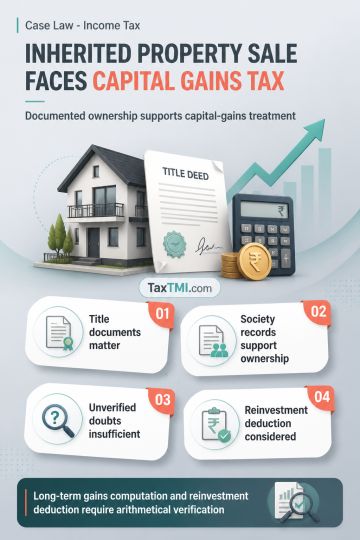
Inherited property sale proceeds require capital-gains treatment where ownership is supported by evidence, not suspicion or unverified signature doubt...
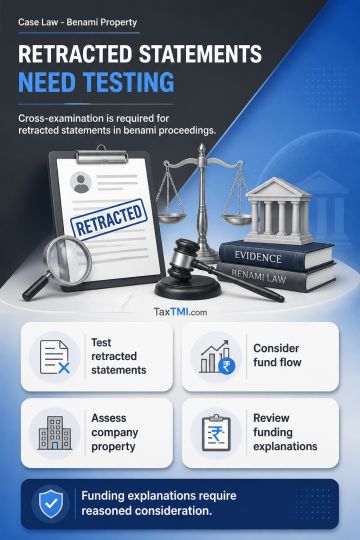
Cross-examination of retracted statements is essential where foundational evidence supports a benami allegation and documented funding explanations re...
Capital-goods exemption covers plant-modernisation accessories, while the import restriction applies only to earlier capital-goods components and spar...
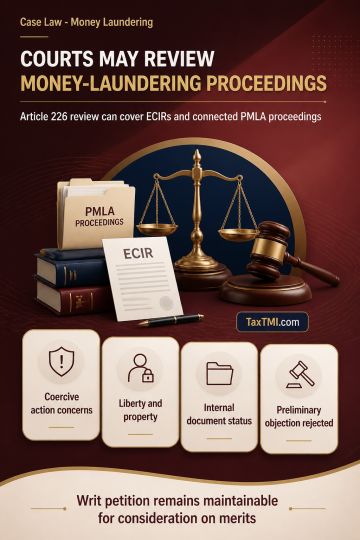
Constitutional judicial review permits challenges to ECIRs and connected money-laundering proceedings where coercive action affects fundamental intere...
Illness supported by undisputed medical material was treated as sufficient cause for condoning a 36-day delay in a petition under Section 58(3) of the Companies Act, with the Tribunal noting that the explanation remained uncontroverted despite opportunity. It held that "sufficient cause" is to be construed liberally to secure decision on merits, that Section 58(3) does not create a non-condonable outer limit, and that the Limitation Act principles could apply through Section 433 read with Section 29, with Rule 11 also available to advance substantial justice. The challenge to condonation was rejected and the delay remained condoned.
Illness supported by undisputed medical material was treated as sufficient cause for condoning a 36-day delay in a petition under Section 58(3) of the Companies Act, with the Tribunal noting that the explanation remained uncontroverted despite opportunity. It held that "sufficient cause" is to be construed liberally to secure decision on merits, that Section 58(3) does not create a non-condonable outer limit, and that the Limitation Act principles could apply through Section 433 read with Section 29, with Rule 11 also available to advance substantial justice. The challenge to condonation was rejected and the delay remained condoned.
Note: It is a system-generated summary and is for quick reference only.
 TaxTMI
 of 4805















 Join Channel


 TaxTMI