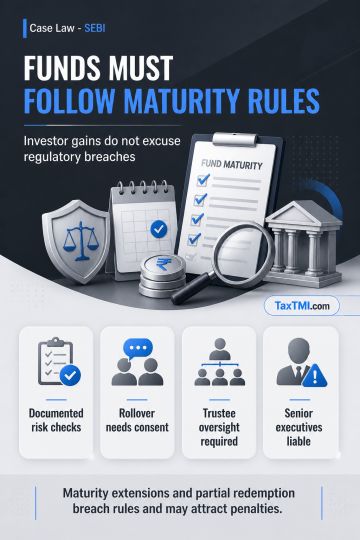
Mutual fund maturity rules require proper rollover, redemption, disclosure, and due diligence; investor gains cannot excuse regulatory breaches or pen...
Threshold exemption excludes exempt services, while stamp-paper purchases avoid reverse charge; consequential service tax penalties were also set asid...
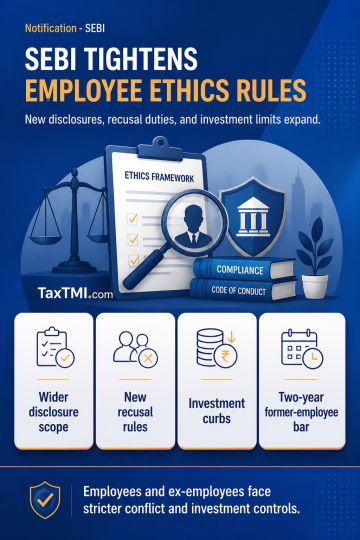
Employee conflict disclosures and investment restrictions expand with new recusal duties, post-employment limits, and compliance reporting requirement...
A second charge created under a consent decree and consequential deed of charge was upheld as a valid security interest where the first charge holder's priority remained expressly preserved and the second charge operated only after discharge of the first charge. The Tribunal held that absence of the first charge holder's prior consent did not render the second charge a nullity, and the liquidator was bound by the decree and deed. It also held that Regulation 21 of the Liquidation Process Regulations is enabling, not exhaustive, so security interest may be proved by other valid material. Non-registration under Section 77 of the Companies Act was not, by itself, enough to deny secured status. The appeal was dismissed.
A second charge created under a consent decree and consequential deed of charge was upheld as a valid security interest where the first charge holder's priority remained expressly preserved and the second charge operated only after discharge of the first charge. The Tribunal held that absence of the first charge holder's prior consent did not render the second charge a nullity, and the liquidator was bound by the decree and deed. It also held that Regulation 21 of the Liquidation Process Regulations is enabling, not exhaustive, so security interest may be proved by other valid material. Non-registration under Section 77 of the Companies Act was not, by itself, enough to deny secured status. The appeal was dismissed.
Note: It is a system-generated summary and is for quick reference only.
 TaxTMI
  TaxTMI
 of 4807












 Join Channel