Threshold exemption excludes exempt services, while stamp-paper purchases avoid reverse charge; consequential service tax penalties were also set asid...
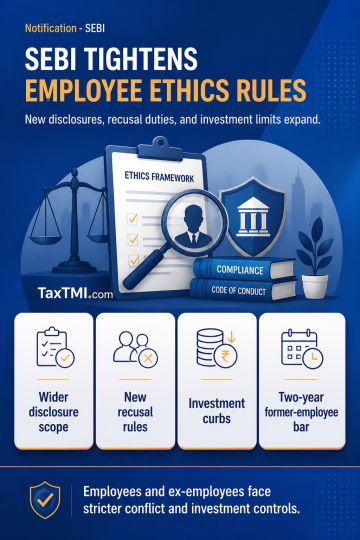
Employee conflict disclosures and investment restrictions expand with new recusal duties, post-employment limits, and compliance reporting requirement...
A consortium under a resolution process could not be reconstituted after the original resolution plan had already been approved by the CoC. The Tribunal held that the RFRP clause permitting a change in consortium applied only before plan approval, because eligibility, financial strength, feasibility and viability had already been assessed on the original consortium and its consortium agreement. Induction of a new member with a substantial shareholding after approval created a reconstituted applicant outside the final list of prospective resolution applicants, contrary to the RFRP and the CIRP framework. The plea based on CoC commercial wisdom was rejected, as judicial deference does not extend to plans that fail statutory and process compliance. The remand for reconsideration was upheld.
A consortium under a resolution process could not be reconstituted after the original resolution plan had already been approved by the CoC. The Tribunal held that the RFRP clause permitting a change in consortium applied only before plan approval, because eligibility, financial strength, feasibility and viability had already been assessed on the original consortium and its consortium agreement. Induction of a new member with a substantial shareholding after approval created a reconstituted applicant outside the final list of prospective resolution applicants, contrary to the RFRP and the CIRP framework. The plea based on CoC commercial wisdom was rejected, as judicial deference does not extend to plans that fail statutory and process compliance. The remand for reconsideration was upheld.
Note: It is a system-generated summary and is for quick reference only.
 TaxTMI
 of 4807











 Join Channel


 TaxTMI
