Specified regulatory authority income receives conditional tax exemption, subject to non-commercial activity, unchanged income character, and return f...
Tax exemption for regulatory authority income applies retrospectively, subject to non-commercial activity, unchanged income sources, and return-filing...
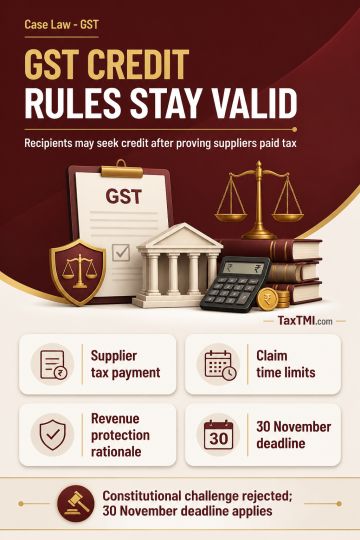
Input tax credit conditions remain constitutionally valid, with eligible recipient claims considered under GST circulars and retrospective filing dead...
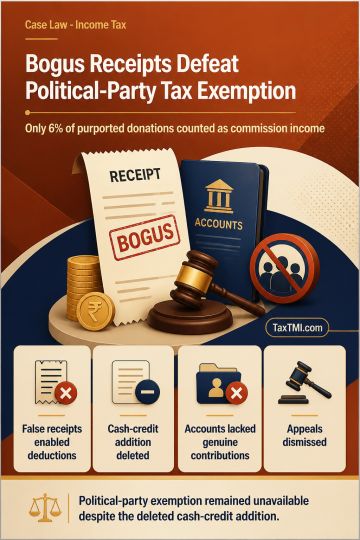
Bogus donation receipts justified commission income assessment and defeated political-party tax exemption for inaccurate accounts and reporting failur...
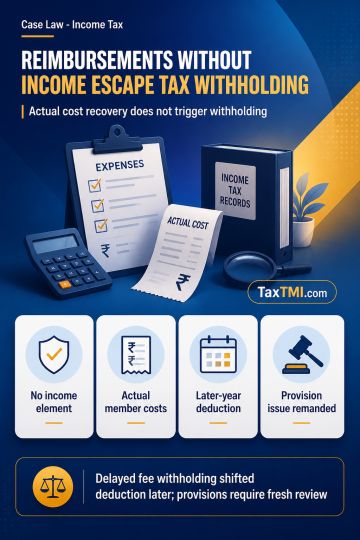
Pure reimbursement without income element escapes tax withholding, while delayed withholding and unsupported provisions face deferred or renewed scrut...
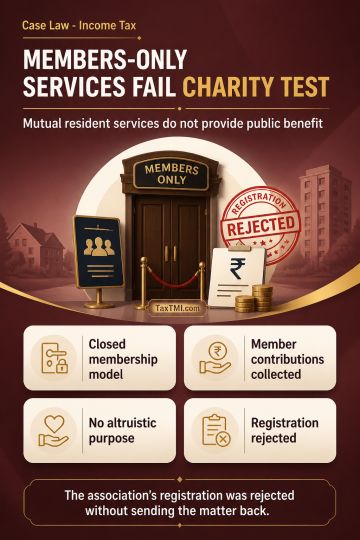
Public benefit requirement defeats charitable registration where residents' association services are reciprocal, member-only facilities governed by mu...
Mere use of borrowed funds or the volume of share transactions did not change the character of shareholdings into stock-in-trade where the assessee consistently treated listed shares as investments and held them for more than 12 months. The Tribunal applied the settled principle that intention, consistency in treatment, and the surrounding facts govern classification of share transaction income. As the Assessing Officer relied only on the alleged flow of borrowed funds and did not make an objective analysis of frequency, holding period, intention at purchase, or book treatment, the gains were correctly assessed as capital gains. The Tribunal upheld the CIT(A) and treated both long-term and short-term gains as capital gains, not business income.
Mere use of borrowed funds or the volume of share transactions did not change the character of shareholdings into stock-in-trade where the assessee consistently treated listed shares as investments and held them for more than 12 months. The Tribunal applied the settled principle that intention, consistency in treatment, and the surrounding facts govern classification of share transaction income. As the Assessing Officer relied only on the alleged flow of borrowed funds and did not make an objective analysis of frequency, holding period, intention at purchase, or book treatment, the gains were correctly assessed as capital gains. The Tribunal upheld the CIT(A) and treated both long-term and short-term gains as capital gains, not business income.
Note: It is a system-generated summary and is for quick reference only.
 TaxTMI
  TaxTMI
 of 4814








 Join Channel


