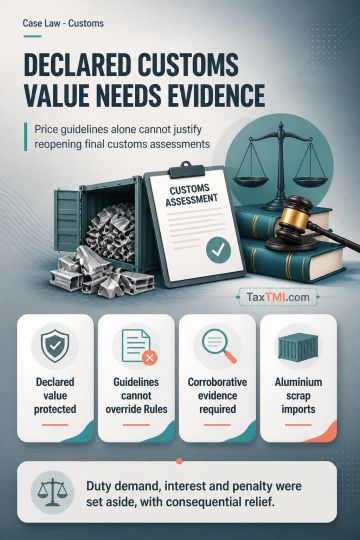
Transaction value cannot be rejected solely on non-statutory valuation guidelines without corroborative evidence supporting reassessment of final cust...
Cross-examination rights and corroborated evidence limit customs penalties for misdeclaration in genuine import transactions involving documented clea...
Tariff classification of vehicle gear components follows the specific gearing entry, displacing motor-vehicle parts classification and related liabili...
Necessary-party requirements limit impleadment of independent entities, while deferred consideration does not create an appealable adverse determinati...
Food supplement classification requires common parlance and authoritative tests, preventing treatment as proprietary Ayurvedic medicines without suppo...
Mere use of borrowed funds or the volume of share transactions did not change the character of shareholdings into stock-in-trade where the assessee consistently treated listed shares as investments and held them for more than 12 months. The Tribunal applied the settled principle that intention, consistency in treatment, and the surrounding facts govern classification of share transaction income. As the Assessing Officer relied only on the alleged flow of borrowed funds and did not make an objective analysis of frequency, holding period, intention at purchase, or book treatment, the gains were correctly assessed as capital gains. The Tribunal upheld the CIT(A) and treated both long-term and short-term gains as capital gains, not business income.
Mere use of borrowed funds or the volume of share transactions did not change the character of shareholdings into stock-in-trade where the assessee consistently treated listed shares as investments and held them for more than 12 months. The Tribunal applied the settled principle that intention, consistency in treatment, and the surrounding facts govern classification of share transaction income. As the Assessing Officer relied only on the alleged flow of borrowed funds and did not make an objective analysis of frequency, holding period, intention at purchase, or book treatment, the gains were correctly assessed as capital gains. The Tribunal upheld the CIT(A) and treated both long-term and short-term gains as capital gains, not business income.
Note: It is a system-generated summary and is for quick reference only.
 TaxTMI
  TaxTMI
 of 4814















 Join Channel




