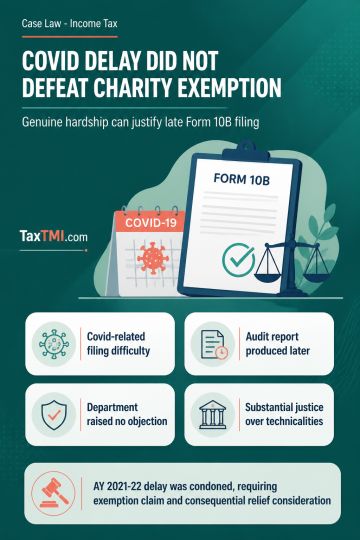
Belated Form 10B filing during Covid-19 cannot defeat charitable exemption where genuine hardship warrants condonation and substantial justice prevail...
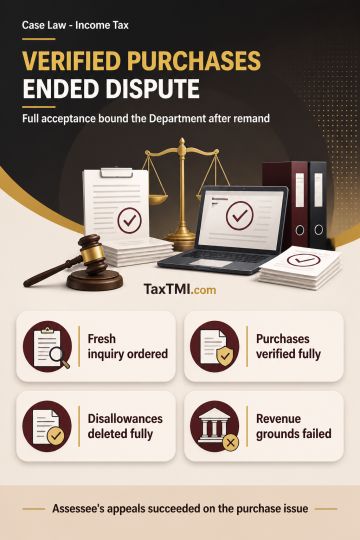
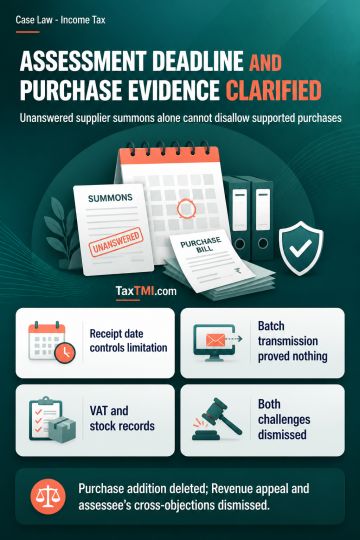
Limitation for consequential assessments runs from prescribed authority receipt, while verified purchases cannot be disallowed merely for unanswered s...
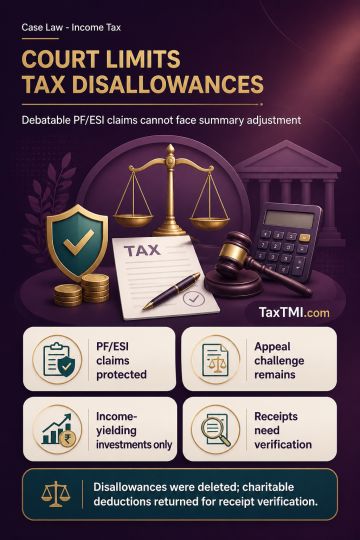
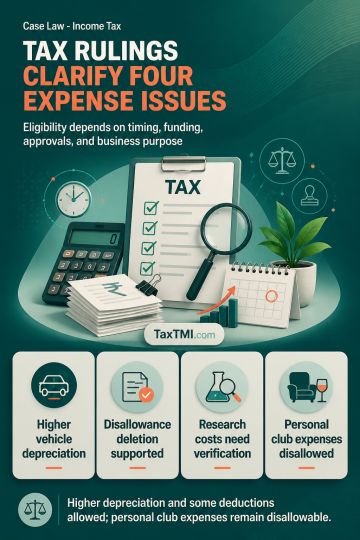
Higher depreciation for qualifying commercial vehicles, exempt-income disallowance, research deduction verification, and club-expense treatment clarif...
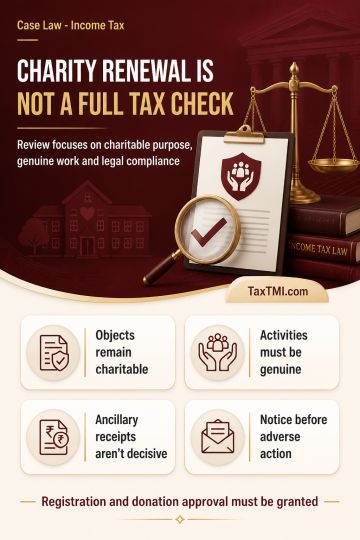
Charitable registration renewal cannot become an assessment of receipts, profitability or annual exemption compliance, requiring renewal and donation ...
Page of 4805
Press 'Enter' after typing page number.
61 to 80 of 96100 Results
❮
❯
❯❯
0 / 200
Expand Note
Add to Folder
No Folders have been created
+
Are you sure you want to delete "My most important" ?
Mere use of borrowed funds or the volume of share transactions did not change the character of shareholdings into stock-in-trade where the assessee consistently treated listed shares as investments and held them for more than 12 months. The Tribunal applied the settled principle that intention, consistency in treatment, and the surrounding facts govern classification of share transaction income. As the Assessing Officer relied only on the alleged flow of borrowed funds and did not make an objective analysis of frequency, holding period, intention at purchase, or book treatment, the gains were correctly assessed as capital gains. The Tribunal upheld the CIT(A) and treated both long-term and short-term gains as capital gains, not business income.
Mere use of borrowed funds or the volume of share transactions did not change the character of shareholdings into stock-in-trade where the assessee consistently treated listed shares as investments and held them for more than 12 months. The Tribunal applied the settled principle that intention, consistency in treatment, and the surrounding facts govern classification of share transaction income. As the Assessing Officer relied only on the alleged flow of borrowed funds and did not make an objective analysis of frequency, holding period, intention at purchase, or book treatment, the gains were correctly assessed as capital gains. The Tribunal upheld the CIT(A) and treated both long-term and short-term gains as capital gains, not business income.
Note: It is a system-generated summary and is for quick reference only.
 TaxTMI
 of 4805




 Join Channel


 TaxTMI