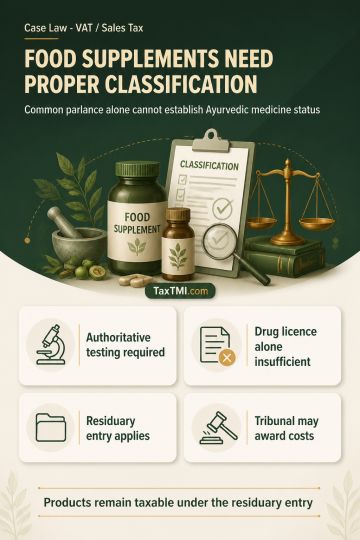
Food supplement classification requires common parlance and authoritative tests, preventing treatment as proprietary Ayurvedic medicines without suppo...
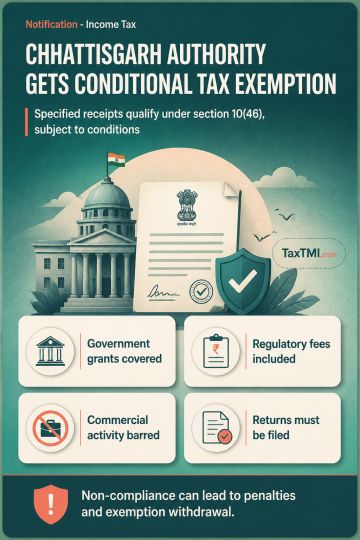
Specified regulatory authority income receives conditional tax exemption, subject to non-commercial activity, unchanged income character, and return f...
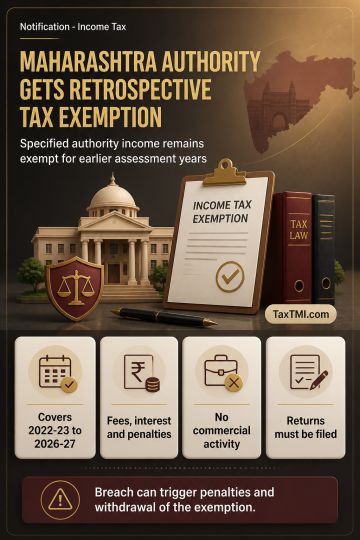
Tax exemption for regulatory authority income applies retrospectively, subject to non-commercial activity, unchanged income sources, and return-filing...
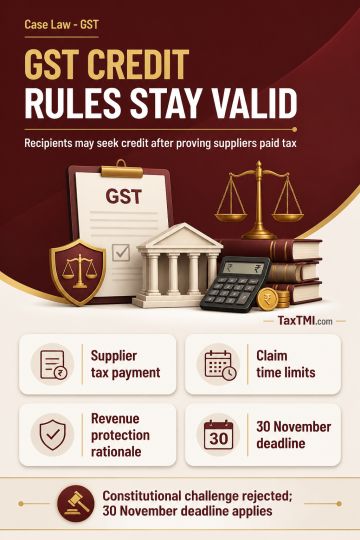
Input tax credit conditions remain constitutionally valid, with eligible recipient claims considered under GST circulars and retrospective filing dead...
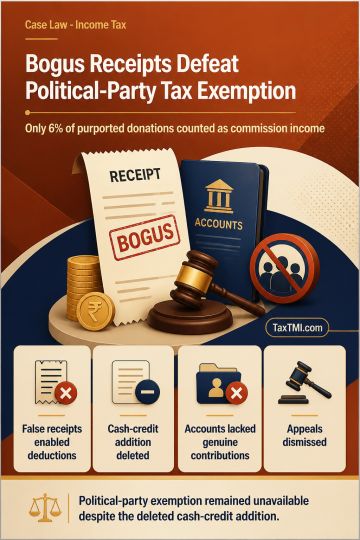
Bogus donation receipts justified commission income assessment and defeated political-party tax exemption for inaccurate accounts and reporting failur...
Page of 4811
Press 'Enter' after typing page number.
901 to 920 of 96208 Results
❮
❯
❯❯
0 / 200
Expand Note
Add to Folder
No Folders have been created
+
Are you sure you want to delete "My most important" ?
Voice termination service receipts were held not to be royalty or fees for technical services under the Act or the India-USA DTAA because the payment was for a standard telecom service, with no transfer of a right in equipment, intellectual property, or any secret process. The Tribunal followed prior coordinate bench and HC rulings, and held that retrospective domestic amendments broadening "process" could not enlarge the treaty definition of royalty through Article 3(2). The receipts were therefore business profits, and in the absence of a permanent establishment in India, they were not taxable in India.
Voice termination service receipts were held not to be royalty or fees for technical services under the Act or the India-USA DTAA because the payment was for a standard telecom service, with no transfer of a right in equipment, intellectual property, or any secret process. The Tribunal followed prior coordinate bench and HC rulings, and held that retrospective domestic amendments broadening "process" could not enlarge the treaty definition of royalty through Article 3(2). The receipts were therefore business profits, and in the absence of a permanent establishment in India, they were not taxable in India.
Note: It is a system-generated summary and is for quick reference only.
 TaxTMI
  TaxTMI
 of 4811










 Join Channel