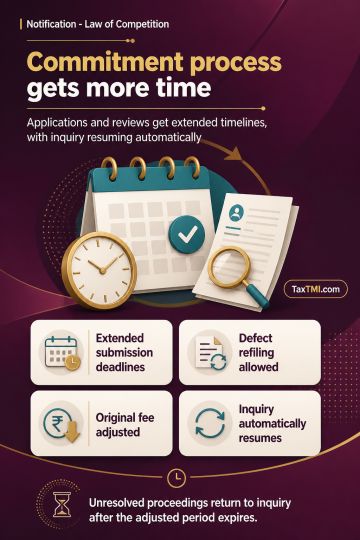
Commitment proceedings gain extended timelines, structured defect refiling, and automatic resumption of inquiry after the adjusted completion period e...
Centralised assessment transfer becomes unwarranted once the searched person's assessment is complete, requiring restoration to the appropriate charge...
Co-operative deduction eligibility excludes refund and commercial-bank interest, while qualifying co-operative investments require entity-wise verific...
Enhanced tax rate on surrendered unexplained income applies prospectively, while cash-deposit telescoping requires verification of available surrender...
Page of 4807
Press 'Enter' after typing page number.
141 to 160 of 96140 Results
❮
❯
❯❯
0 / 200
Expand Note
Add to Folder
No Folders have been created
+
Are you sure you want to delete "My most important" ?
A resolution plan was rejected because material non-compliances in the CIRP, including inadequate disclosure of avoidance/PUFE transactions, non-transparent handling of those proceedings, and lapses in performance security, undermined the fairness of the process. The Appellate Tribunal held that the Committee of Creditors' commercial wisdom could not cure defects where other applicants were deprived of material information and the plan proceeded on incomplete disclosure. It also upheld adverse findings against the erstwhile resolution professional, noting unsatisfactory explanations for failures in dealing with avoidance applications and security compliance. Both appeals were dismissed, and the direction to investigate the resolution professional's conduct was maintained.
A resolution plan was rejected because material non-compliances in the CIRP, including inadequate disclosure of avoidance/PUFE transactions, non-transparent handling of those proceedings, and lapses in performance security, undermined the fairness of the process. The Appellate Tribunal held that the Committee of Creditors' commercial wisdom could not cure defects where other applicants were deprived of material information and the plan proceeded on incomplete disclosure. It also upheld adverse findings against the erstwhile resolution professional, noting unsatisfactory explanations for failures in dealing with avoidance applications and security compliance. Both appeals were dismissed, and the direction to investigate the resolution professional's conduct was maintained.
Note: It is a system-generated summary and is for quick reference only.
 TaxTMI
  TaxTMI
 of 4807

















 Join Channel