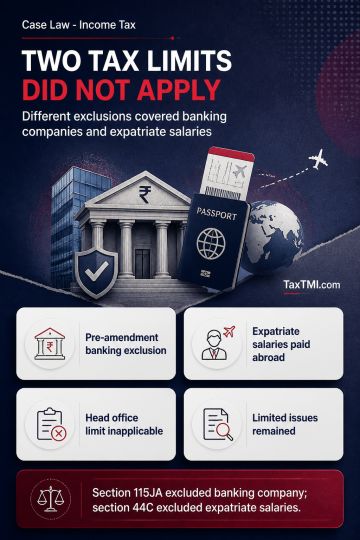
Minimum alternate tax exclusions for pre-amendment banking companies and expatriate Indian branch salaries remain outside head office expenditure limi...
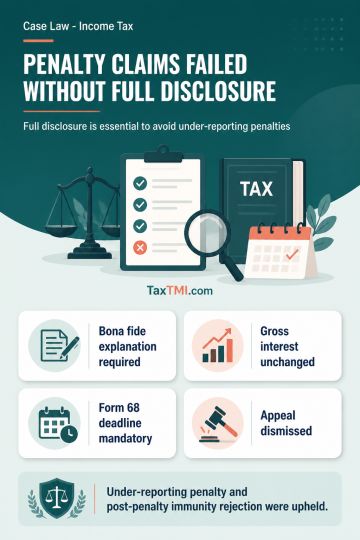
Bona fide disclosure requirements govern under-reporting penalties, and post-penalty immunity applications cannot secure available statutory protectio...
Certificate-of-origin verification procedure governs preferential customs benefits; denial without retroactive verification was set aside with consequ...
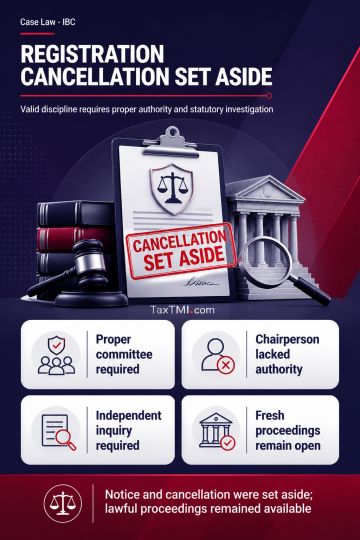
Disciplinary Committee jurisdiction and mandatory investigation requirements invalidated cancellation of an insolvency professional's registration and...
ITAT held that for deduction under section 54F, the decisive question was whether the disputed property could legally be treated as a residential house on the relevant date. On the basis of the registered purchase deed, later sale deed and the purchaser's notarised affidavit, the property was found to be open land fit for inhabitation, not a residential premises. Its appearance in the balance sheet at a stated value did not prove residential character. As the assessee was therefore not shown to own more than one residential house, the statutory condition for denial of deduction was not met and the deduction was rightly allowed.
ITAT held that for deduction under section 54F, the decisive question was whether the disputed property could legally be treated as a residential house on the relevant date. On the basis of the registered purchase deed, later sale deed and the purchaser's notarised affidavit, the property was found to be open land fit for inhabitation, not a residential premises. Its appearance in the balance sheet at a stated value did not prove residential character. As the assessee was therefore not shown to own more than one residential house, the statutory condition for denial of deduction was not met and the deduction was rightly allowed.
Note: It is a system-generated summary and is for quick reference only.
 TaxTMI
  TaxTMI
 of 4816








 Join Channel