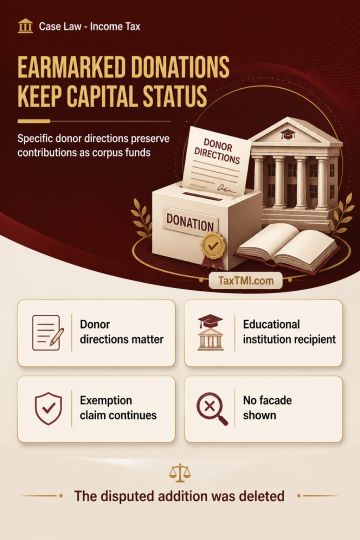
Donor-directed corpus contributions retain capital character despite exemption claims under section 10(23C)(vi), preventing their treatment as taxable...
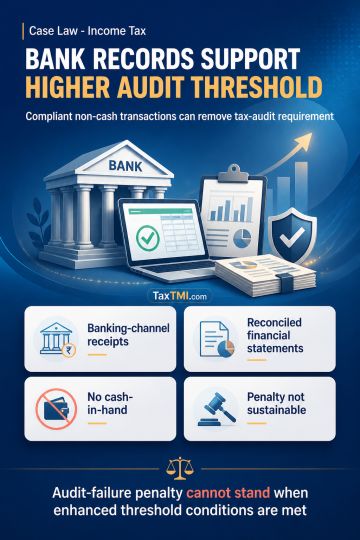
Enhanced tax-audit threshold applies where banking records establish compliant non-cash receipts and payments, eliminating penalty exposure for audit ...
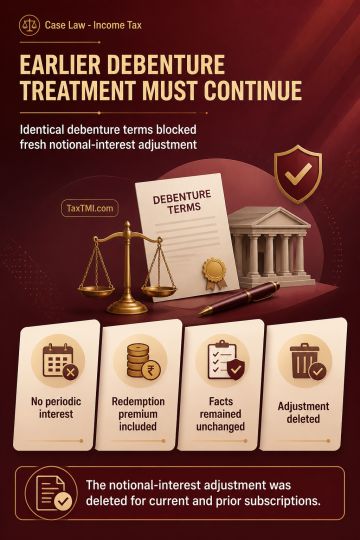
Transfer pricing consistency protects identical non-interest-bearing debenture terms from a later notional-interest adjustment without valid statutory...
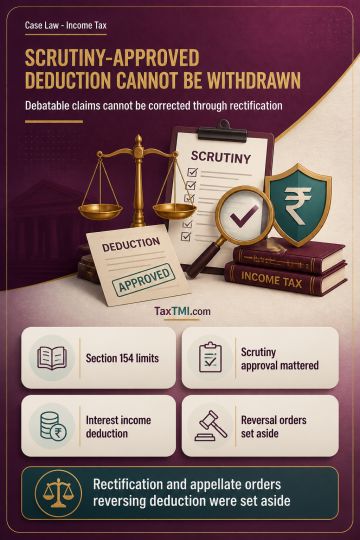
Rectification of debatable deduction claims cannot reverse scrutiny-approved co-operative society interest income deductions as apparent record errors...
ITAT held that for deduction under section 54F, the decisive question was whether the disputed property could legally be treated as a residential house on the relevant date. On the basis of the registered purchase deed, later sale deed and the purchaser's notarised affidavit, the property was found to be open land fit for inhabitation, not a residential premises. Its appearance in the balance sheet at a stated value did not prove residential character. As the assessee was therefore not shown to own more than one residential house, the statutory condition for denial of deduction was not met and the deduction was rightly allowed.
ITAT held that for deduction under section 54F, the decisive question was whether the disputed property could legally be treated as a residential house on the relevant date. On the basis of the registered purchase deed, later sale deed and the purchaser's notarised affidavit, the property was found to be open land fit for inhabitation, not a residential premises. Its appearance in the balance sheet at a stated value did not prove residential character. As the assessee was therefore not shown to own more than one residential house, the statutory condition for denial of deduction was not met and the deduction was rightly allowed.
Note: It is a system-generated summary and is for quick reference only.
 TaxTMI
  TaxTMI
 of 4824









 Join Channel


