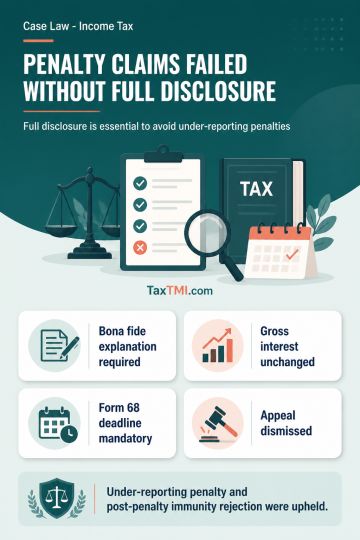
Bona fide disclosure requirements govern under-reporting penalties, and post-penalty immunity applications cannot secure available statutory protectio...
Certificate-of-origin verification procedure governs preferential customs benefits; denial without retroactive verification was set aside with consequ...
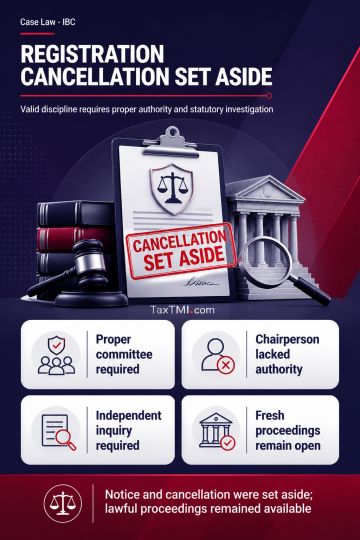
Disciplinary Committee jurisdiction and mandatory investigation requirements invalidated cancellation of an insolvency professional's registration and...
Retention of seized property survives where recorded reasons support proceeds of crime, while stayed investigation periods are excluded from limitatio...
Section 7 proceedings based on a money decree cannot be used as a substitute for execution where the real dispute concerns computation of the decretal balance and ordinary enforcement remedies remain available. The Court reiterated that the IBC is meant for genuine insolvency and revival, not coercive debt recovery; on these facts, the corporate debtor was solvent, substantial payments had already been made, and the computation issue was already pending before the Delhi High Court. Although a money decree may in principle give rise to a fresh cause of action for insolvency proceedings, that principle is not automatic and the adjudicating forum must still guard against abuse. The NCLAT erred in treating the decree alone as sufficient; the insolvency application was restored to dismissal and execution was left open as the proper remedy.
Section 7 proceedings based on a money decree cannot be used as a substitute for execution where the real dispute concerns computation of the decretal balance and ordinary enforcement remedies remain available. The Court reiterated that the IBC is meant for genuine insolvency and revival, not coercive debt recovery; on these facts, the corporate debtor was solvent, substantial payments had already been made, and the computation issue was already pending before the Delhi High Court. Although a money decree may in principle give rise to a fresh cause of action for insolvency proceedings, that principle is not automatic and the adjudicating forum must still guard against abuse. The NCLAT erred in treating the decree alone as sufficient; the insolvency application was restored to dismissal and execution was left open as the proper remedy.
Note: It is a system-generated summary and is for quick reference only.
 TaxTMI
  TaxTMI
 of 4817














 Join Channel


